Does Japanese knotweed affect property sales?
Yes. When selling a property in England or Wales, sellers must declare whether Japanese knotweed is present on the TA6 Property Information Form. Failure to disclose known knotweed can lead to delays, renegotiation or legal claims for misrepresentation.
Can you get a mortgage on a property with Japanese knotweed?
In many cases, yes. Most lenders require evidence of a professional survey and a structured treatment plan. Properties with documented management strategies are more likely to meet lending criteria.
Is it illegal to have Japanese knotweed on your property?
No, it is not illegal to have Japanese knotweed on private land. However, it is illegal to cause it to spread into the wild under the Wildlife and Countryside Act 1981. Allowing it to spread to neighbouring land may also result in civil liability.
Does Japanese knotweed reduce property value?
It can affect value depending on proximity to structures, extent of infestation, and whether a professional treatment plan is in place. Managed infestations with proper documentation generally have less impact than untreated sites.
What should property managers do if knotweed is found?
Property managers should obtain a specialist survey, document the extent of growth, implement a formal management strategy, and retain all treatment and waste compliance records. Early action reduces legal and financial risk.
Can Japanese knotweed be completely removed?
Complete eradication typically requires excavation and removal of contaminated soil or long-term structured treatment. The appropriate method depends on site use, development plans and budget.
People Also Ask: Japanese Knotweed and Property
How close to a house is Japanese knotweed a problem?
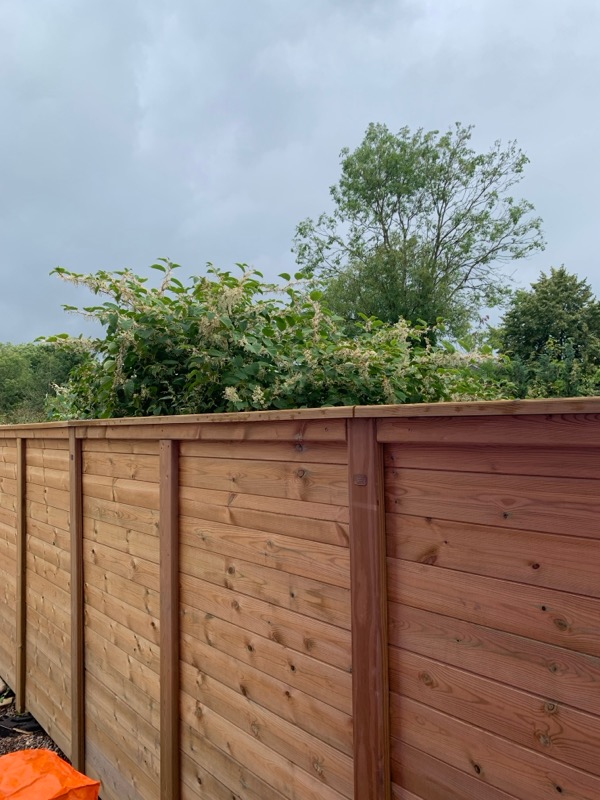
Japanese knotweed can present a risk when it grows near structures, boundaries or underground services. While it does not automatically cause structural damage, its proximity to foundations, walls or drainage systems may influence lender decisions and property value.
What happens if Japanese knotweed spreads to a neighbour’s garden?
If knotweed spreads from your land to neighbouring property, you may be held legally liable for nuisance. Courts have confirmed that landowners must take reasonable steps to prevent spread once aware of an infestation.
Can I remove Japanese knotweed myself?
DIY removal is strongly discouraged. Improper cutting, strimming or soil movement can cause further spread. In addition, knotweed-contaminated soil is classed as controlled waste and must be disposed of in accordance with environmental regulations.
How long does Japanese knotweed treatment take?
Herbicide treatment programmes typically take multiple growing seasons to fully control the plant. Excavation and removal provide a faster solution but may increase short-term costs depending on site conditions.
Do I have to tell my buyer about Japanese knotweed?
Yes. Sellers in England and Wales must answer the Japanese knotweed question on the TA6 form honestly. Failure to disclose known issues can result in legal claims for misrepresentation after completion.
Is Japanese knotweed covered by home insurance?
Most standard home insurance policies do not cover treatment of Japanese knotweed. However, an insurance-backed guarantee is linked to most formal management plans.