Combined treatments for knotweed removal
Discover whether combined treatments for knotweed removal, including herbicide and excavation can provide effective solutions suited to you, your home or your site.
Providing commercial knotweed control for UK Construction, Civils, Developers and Property sectors, our fully compliant knotweed services are geared to manage any site’s requirements including working with infrastructure and environmental factors.
Finding knotweed onsite brings project, financial and compliance risk. Commercial knotweed removal services such as professional knotweed survey, treatment or excavation will get knotweed under control, or completely remove it from site.
As a safety-first, fully licensed Japanese knotweed contractor, we understand the pressure knotweed can place on budgets, timelines, and compliance. That’s why we work closely with project managers, principal contractors, and developers to deliver site-specific, cost-effective solutions that keep your programme on track.
Working with you at every stage, from acquisition, planning and enabling works through to handover – we’ll minimise disruption, reduce risk, and support seamless project delivery:
An effective knotweed solution is never one-size-fits-all.
A truly tailored approach begins with a thorough site survey and a deep understanding of the client’s objectives.
The right solution is a blend of factors: the location of the knotweed relative to buildings, the client’s budget, and, most importantly, their timeline.
For a developer needing to break ground next month, the solution is excavation.
For a landowner managing a boundary infestation with no immediate construction plans, a multi-year herbicide program is more appropriate.
A tailored solution means matching the right industry-approved method to your specific commercial needs.
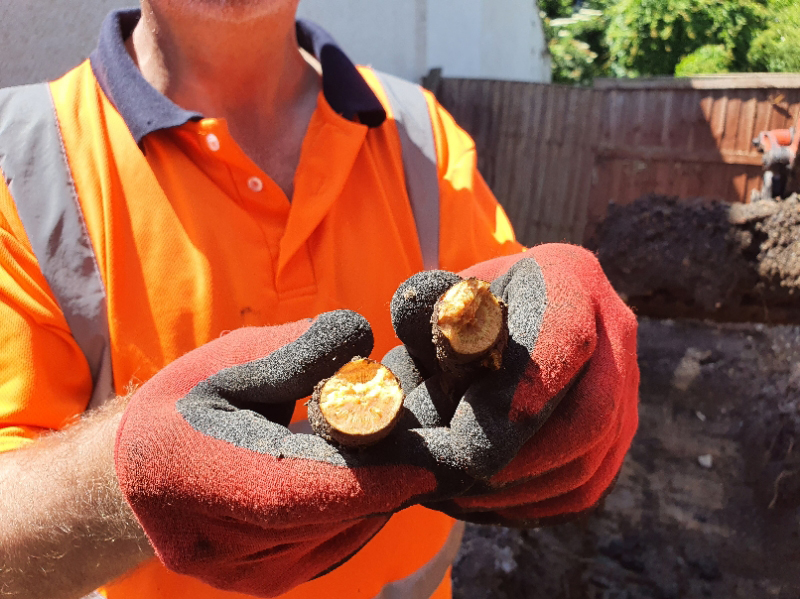
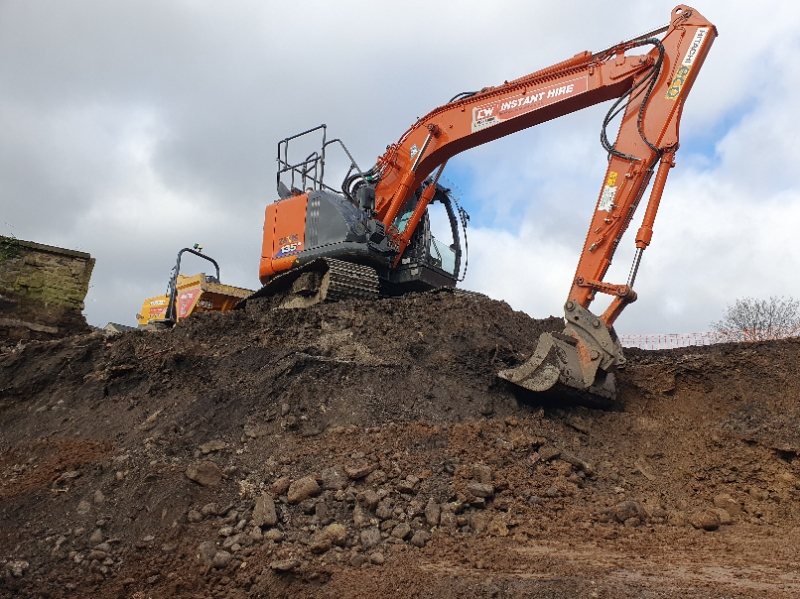
When development timelines are tight and knotweed is located within the construction footprint, excavation is the most effective solution. This method involves physically digging out all contaminated soil and rhizome material for safe disposal at a licensed landfill.
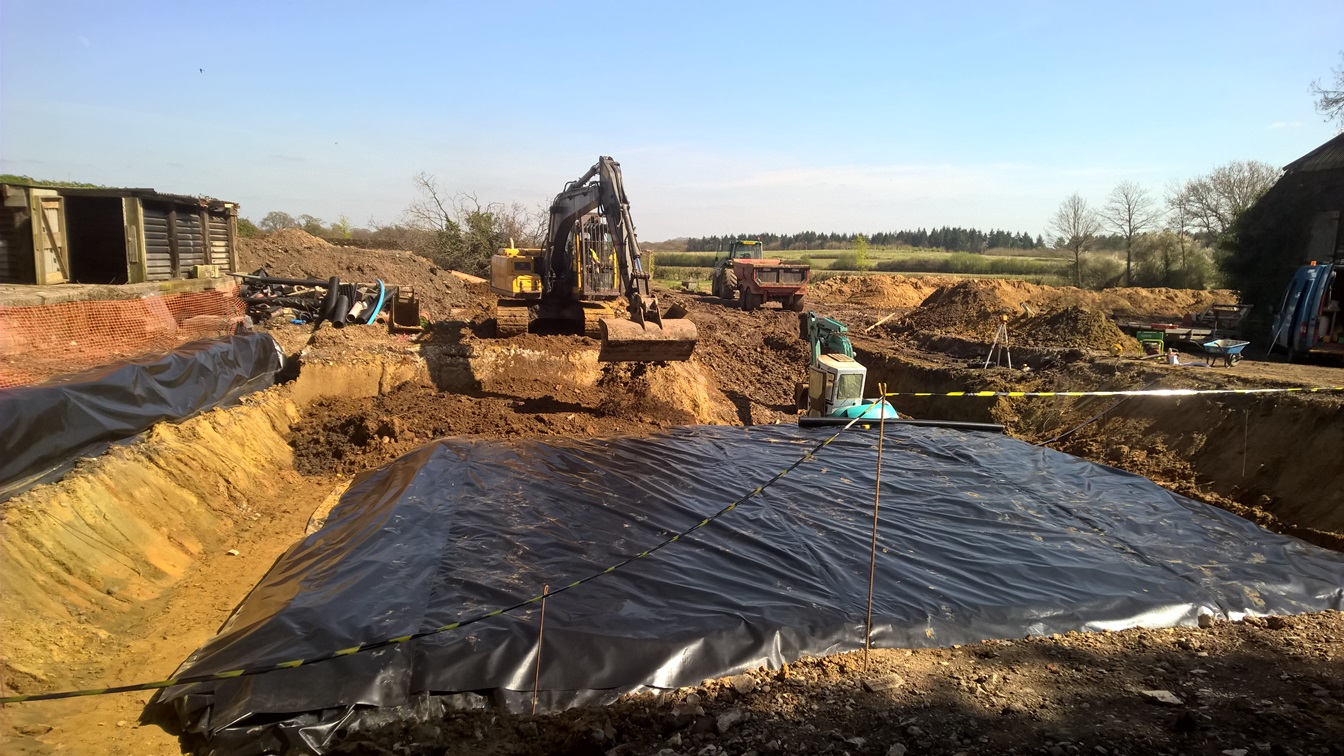
While it has a higher upfront cost compared to taking out a herbicide treatment plan, excavation provides immediate eradication, allowing construction to proceed without the multi-year delay associated with herbicide treatments. For larger sites, options like on-site burial or encapsulation within a protective root barrier membrane can offer a more cost-effective physical removal solution.
Herbicide treatment is a highly effective method for managing Japanese knotweed, but it requires a long-term commitment.
A professional program involves repeated, targeted applications of licensed herbicides over several growing seasons, typically spanning 3-5 years, to exhaust and kill the underground rhizome system.
This approach is best suited for infestations located outside the main development footprint (e.g., in landscape buffer zones) where the ground will not be disturbed. It’s a cost-effective solution for control, but not a method for rapid removal.
For complex commercial sites, we can use advanced techniques to manage knotweed effectively on-site and reduce costs.
The installation of vertical root barriers can be used to isolate an infested area or prevent spread from a neighbouring property, allowing development to proceed on the clean portion of the site.
On large-scale projects, the knotweed soils can be relocated or buried in a cell lined with a root barrier. These options drastically reduce the volume and cost of transporting contaminated waste to a landfill.
The strategy for Japanese knotweed removal depends entirely on its location relative to planned construction.
If an infestation is within the footprint of a future building, foundation, or utility path, complete physical removal through excavation is essential to prevent future structural damage.
However, if the knotweed is located outside this area in a designated buffer zone (typically 7 metres), an in-situ herbicide management plan can be a perfectly suitable and more economical approach.
A professional site assessment is the first step to defining these zones and determining the correct strategy.
Managing invasive species effectively demands that all key stakeholders, clients, consultants and contractors integrate species risk into every stage of the project, starting from feasibility studies. An invasive-species survey should be commissioned early, ideally during the planning phase and will include a walk-over by an ecologist or specialist, species mapping and a risk assessment that informs methods, cost and planning. We’ll provide you with:
It gives you the opportunity to share key information of the project and the site with our team so that any areas of concern or consideration can be discussed, and we can bring to light other aspects whilst explaining the process of excavation to the client – keeping you fully informed from the get-go assists with project decision making.
For any commercial or development project, a Knotweed Management Plan (KMP) is not just recommended – it’s essential.
This formal document, prepared by a qualified specialist, provides a detailed assessment of the infestation and outlines a clear, legally compliant strategy for control or eradication.
A comprehensive KMP typically includes a site survey with mapped locations of the knotweed, a risk assessment, specific recommendations for removal methods (like excavation or herbicide treatment), a timeline for completion, and a full breakdown of costs.
This plan is crucial for demonstrating due diligence to local authorities, lenders, and stakeholders.
Helen from Cosan-CC left us this review: “I worked closely with the JK Ltd Excavation team on a recent scheme and felt incredibly supported all the way through the process. Thanks to their expertise and openness we were able to review and evaluate all the options. I have found all the team to be helpful and responsive, and would definitely recommend them for future works. Thank you!”
For any commercial property, an Insurance-Backed Guarantee (IBG) is a crucial document that provides long-term peace of mind.
While a contractor’s guarantee covers their work, an IBG, typically for 10 years, protects your investment even if the removal company ceases to trade.
This is often a mandatory requirement for lenders and is essential for the future sale of the property. When evaluating specialists, always ensure they provide a genuine IBG from a reputable, FCA-regulated insurer.
To ignore knotweed on land that you’ve invested in for development or to incorrectly treat knotweed can prove costly in the long term. This is why we work with you to devise the most appropriate remediation solution based on the proposals for the site. Our methods are fully compliant with legislation and codes of practice and ensure that your land can be remediated for its designated purpose.
Furthermore, knotweed needs to be disposed of in a licensed landfill by professionals with a contaminated waste removal license. Japanese Knotweed Ltd. can take care of all these problems for you with our highly trained and accredited professionals.
Whether you are at the pre-purchase stage, or have already invested in a brownfield site we can ascertain via survey whether it is contaminated with Japanese knotweed. Contamination is a concern for remediation of these sites, but does not mean you should not consider investing. If Japanese knotweed is found we can excavate and remove it for you so your plans can proceed.
It’s not all bad news!
Finding out that knotweed is on land planned for development is generally considered bad news, but here’s the good news – you could be eligible for tax relief. Land Remediation Relief (LRR) is a powerful tool for companies aiming to develop brownfield sites and contribute to environmental regeneration. By understanding the eligibility criteria and the types of contamination that qualify, businesses can effectively leverage this relief to offset remediation costs and enhance their financial outcomes. Find out if you can claim:
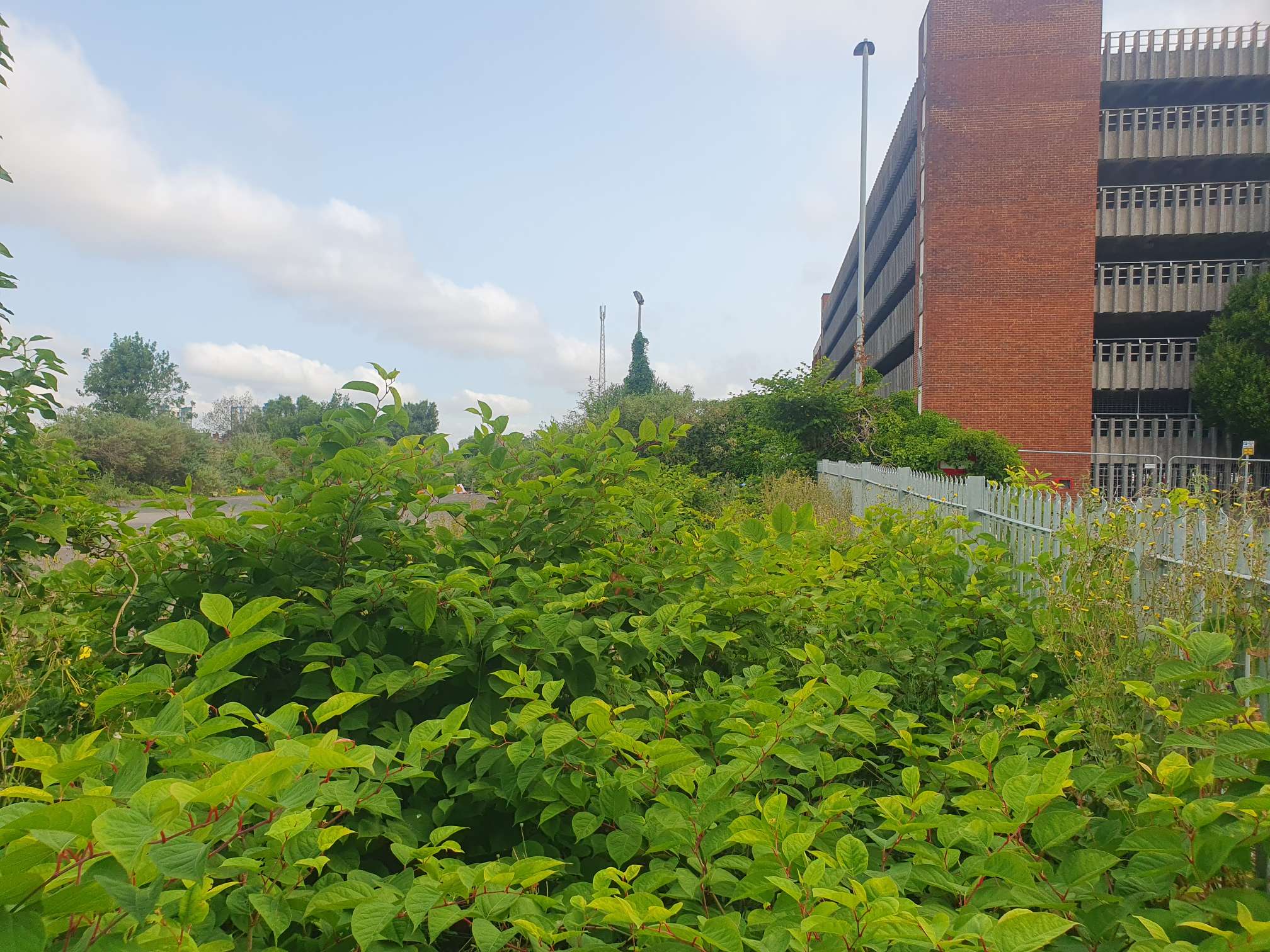
Japanese knotweed can be a menace for commercial property owners and businesses. If left untreated it will create thick screens of bamboo-like growth. It is highly resilient and can’t be killed with conventional means such as pulling or strimming.
Knotweed can cause damage to structures, buildings, concrete (parking areas and pathways) and underground drainage systems – as it grows it will creep through any crack or gap in the ground. It can also pose a health-and-safety risk by blocking off access routes or creating uneven hard surface areas.
Under a management plan herbicide treatments will keep the knotweed in check and force it into a dormant state, or we can quote to have it completely removed from site.
Our weed control services are the ideal cost effective solution for property management companies that are required to keep areas of access clear of weeds. We also work with facilities management companies in the same way.
As an approved contractor we will control Japanese knotweed on land that is under your management. As the Resident Management Company (RMC) approves the costs for such services to be included in the Service Charge budget we know it is important you can rely on us to get it right. It is also key to have weed control treatment documented for residents wishing to buy or sell their property, so let us take that pain away from you and provide the service and the report, to keep your clients and residents happy. Speak to us today to find out more.
As the UK’s trusted Japanese knotweed removal company, treating and removing knotweed across the UK, we support your business by always using local resources. We complete over 200 knotweed excavation contracts per year and manage over 7,000 herbicide contracts with over 1,000 five-star ratings on independent ratings platform Trustpilot.
We are members of the Property Care Association and have a proven track record working successfully for local councils, developers, construction companies and private landowners. If you are selling or buying a property that is affected by Japanese knotweed, request your free Japanese knotweed survey.
As knotweed is an invasive species classed as “controlled waste”, it can only be removed by licensed organisations. It must be disposed of safely at a licensed landfill site by a registered waste carrier. We do not advise you try to undertake this operation yourself.
The average cost to remove Japanese knotweed varies, depending on the methods involved and the size of the affected areas. If it is identified and dealt with promptly, the costs of removing Japanese knotweed can be kept to a minimum. Long-term herbicide treatment is usually the most cost-effective control method providing successful chemical control of Japanese knotweed within a period of 3-7 years.
Excavation of Japanese knotweed costs more than herbicide treatment due to labour, materials, waste removal and reinstatement costs. However, it ensures complete Japanese knotweed removal allowing free use or development of the property. We provide cost-efficient excavation due to our extensive experience whilst minimising waste volumes.
Discover whether combined treatments for knotweed removal, including herbicide and excavation can provide effective solutions suited to you, your home or your site.
Who's responsible for knotweed discovered on new-build sites? In this article we answer the question; Is there a TA6 form for UK developers?