Combined treatments for knotweed removal
Discover whether combined treatments for knotweed removal, including herbicide and excavation can provide effective solutions suited to you, your home or your site.
Worried about Japanese knotweed? We’re here to quickly help you find out if you have knotweed and deal with it if you have.
Here you’ll quickly discover how getting rid of knotweed from your garden can be easily achieved.
Our professional residential knotweed removal services make everything simple, stress-free, and will get your knotweed fully under control, or completely gone.
As trusted Japanese knotweed experts, we’ve helped thousands of homeowners across the UK protect their properties and remove knotweed for good.
On this page you’ll have all your knotweed concerns answered, discover the methods we use and get the help you need with property sale.
Here’s how our residential knotweed removal services can help you:
Click on any of the service options below or talk to us to get more information or a quick quote.
A cornerstone of knotweed control is the systemic application of a glyphosate-based herbicide. The key to success is not just what you use, but when you use it.
Applications are most effective from early summer to early fall, after the plant has flowered. During this period, the plant begins sending sugars and nutrients down to its rhizomes to store for winter.
By applying herbicide to the leaves at this time, the plant transports the chemical deep into the root system, killing it from within. Applying herbicide in the spring is less effective as the plant’s energy is moving upwards, which prevents the chemical from reaching the roots.
While digging out knotweed seems like a straightforward solution, it is fraught with risk and generally not recommended for DIY attempts. The plant’s rhizome system is incredibly extensive, and leaving even a fingernail-sized fragment in the soil will result in regrowth.
Improper excavation can break up the rhizomes and spread these fragments, dramatically worsening the infestation.
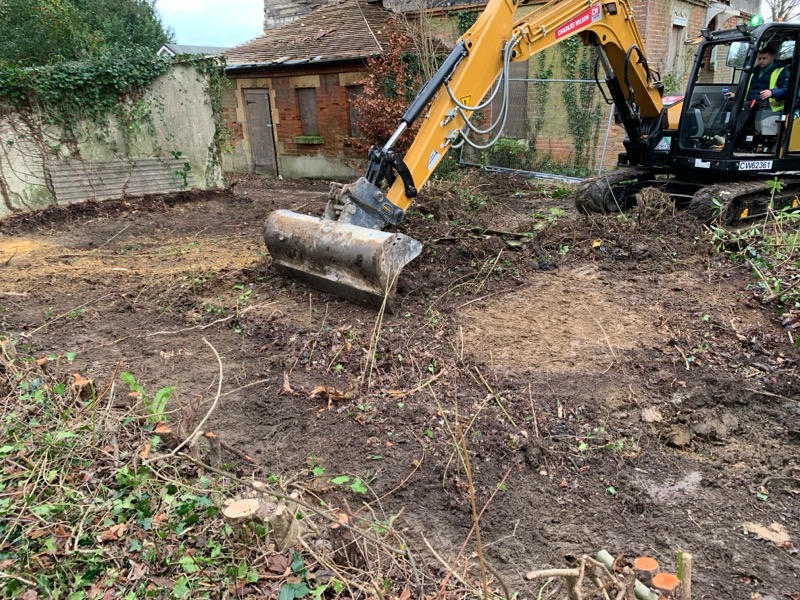
This method is only truly effective when performed by professionals with heavy machinery who can remove a large volume of soil around the plant and ensure it is disposed of as controlled waste according to strict environmental regulations.
Warning: Knotweed material and excavated soils must be disposed of by transporting it to a licensed landfill facility that is equipped to handle and bury controlled waste safely. We are fully licensed and insured to do this.
There are two main removal methods; herbicide application or excavation, and whichever method you prefer it’s crucial to understand the resilience of Japanese knotweed.
Its vast underground root system (rhizomes) can spread over 20 feet wide and 10 feet deep, and even a tiny fragment can sprout a new plant. Consequently, a one-time treatment is rarely successful.
Effective eradication is a long-term commitment, often spanning 3-5 years, that requires persistence, monitoring, and a combination of methods to weaken and eventually kill the entire plant system.
Speak to one of our experts today.
The most successful knotweed removal strategies often combine methods over several years.
For example, a powerful approach for a residential property involves treating the knotweed with a systemic herbicide for 1-2 full seasons to significantly weaken and reduce the mass of the underground rhizome system. Following this a more targeted and less extensive excavation can be performed to remove the remaining, weakened root system.
Alternatively the knotweed can be immediately excavated and a monitoring programme will capture any growth with a few rounds of herbicide spraying.
This integrated approach reduces the risk of regrowth, lowers the volume of contaminated soil that needs to be removed, and can ultimately be more cost-effective and successful than relying on a single method alone.
5* Trust Pilot review: Huge relief! “It was so helpful and a huge relief to be able to contact Japanese Knotweed Ltd and get a quick response that was able to confirm that the plant I had discovered coming over my fence was NOT the dreaded knotweed! Fantastic service. Thank you so much!”
If you are buying or selling a property that is affected by Japanese knotweed, we recommend a Japanese knotweed survey. Lenders are often concerned about the damage that Japanese knotweed can do to a property – this raises questions about its ‘saleability’ in the future meaning lenders want to understand the potential risk of losing money on a property that could reduce in value. This can make it more difficult to secure a mortgage.
Lenders are often concerned about the damage that Japanese knotweed can do to a property – this raises questions about its ‘saleability’ in the future meaning lenders want to understand the potential risk of losing money on a property that could reduce in value. This can make it more difficult to secure a mortgage. Sellers are also required by law to state whether knotweed is on or near their property – declared on the TA6 form – a survey will tell you exactly which box to tick on this form.

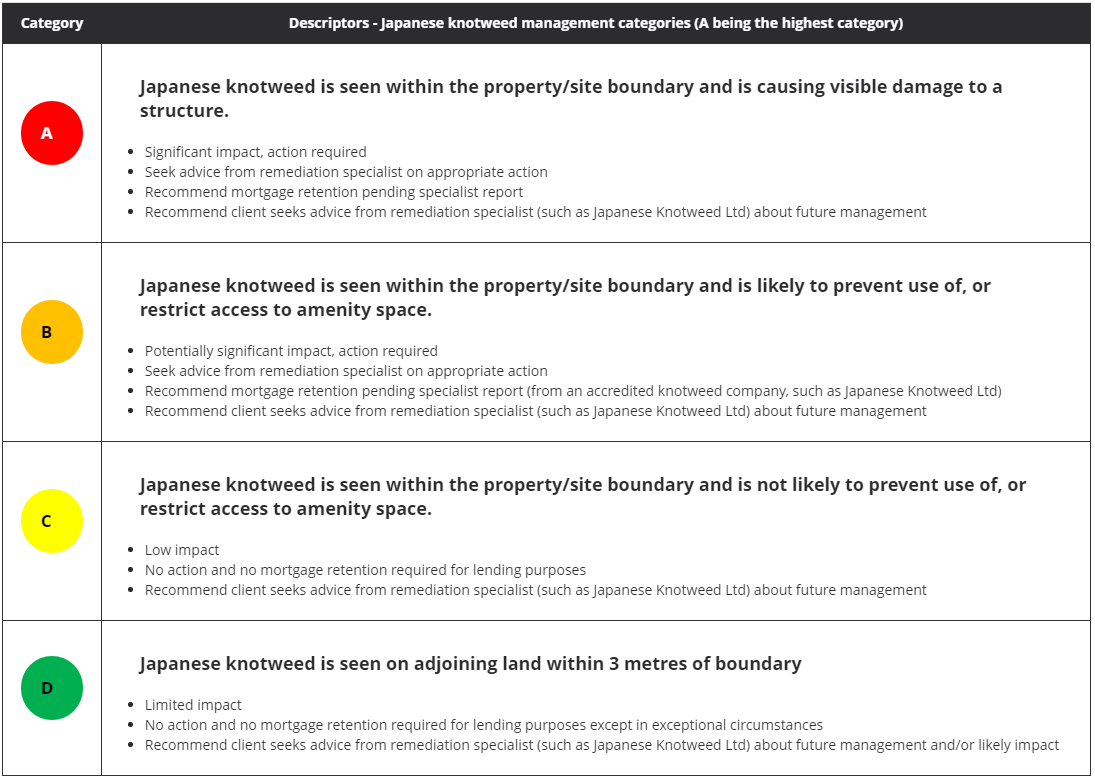
If you suspect that there is knotweed on the property you wish to buy or sell, you may have trouble securing a mortgage. We can conduct a professional Japanese knotweed survey for you that will include a detailed account of our findings, photographs, location plans and confirmation of the knotweed RICS property at risk category along with a Knotweed Management Plan (KMP) proposal.
Armed with the results of the survey and the management plan, you will be able to ensure a much smoother buying or selling process. Click the button below to learn more or book a survey.
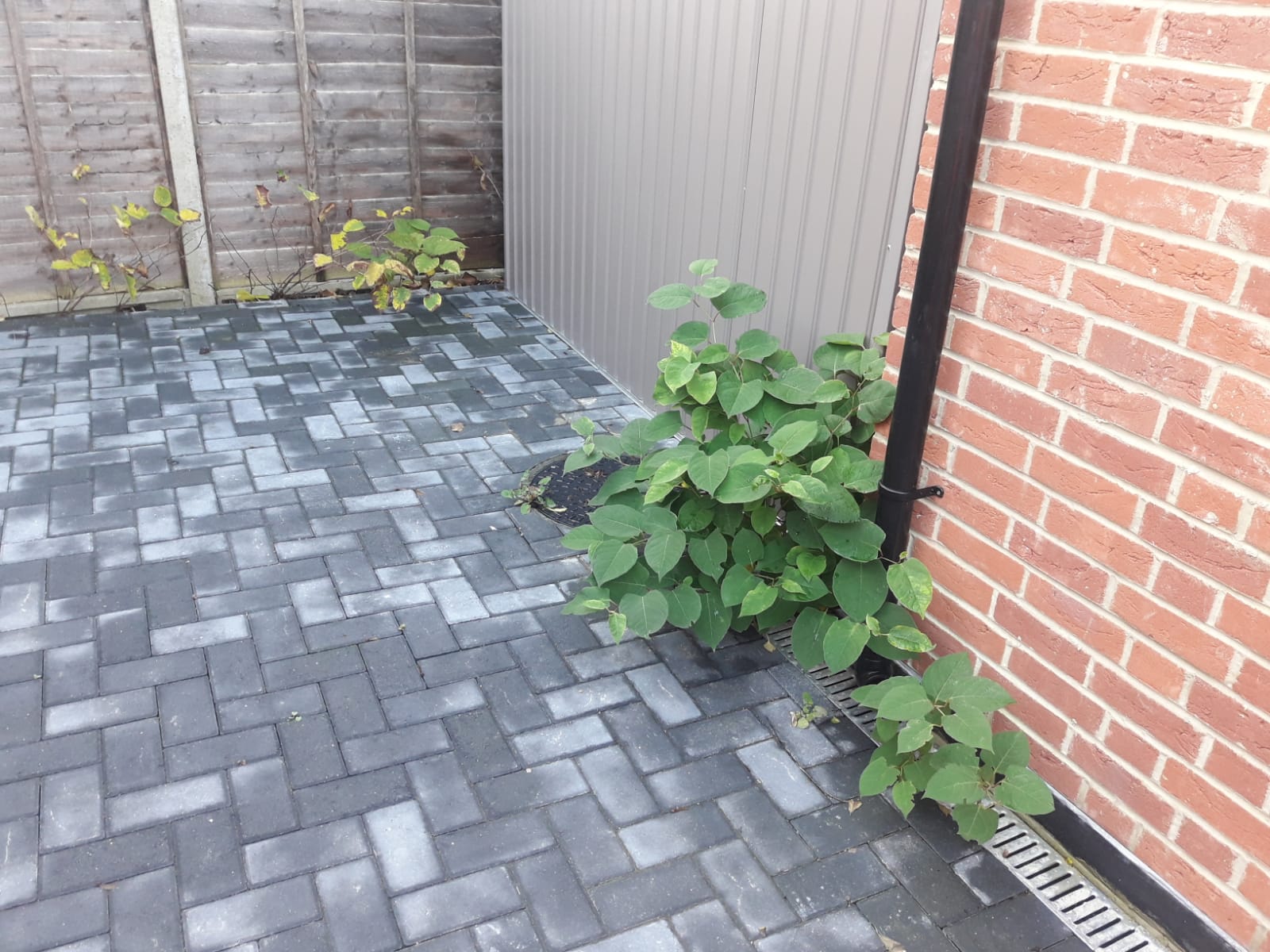
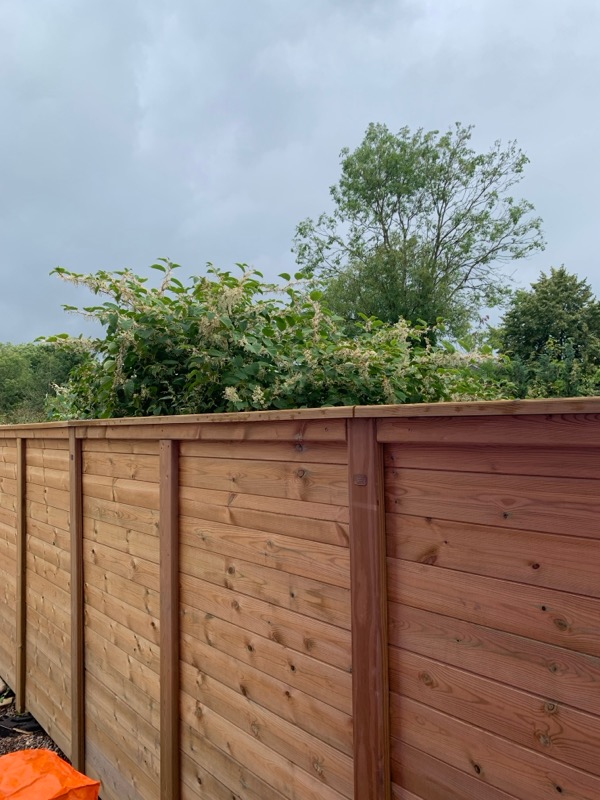
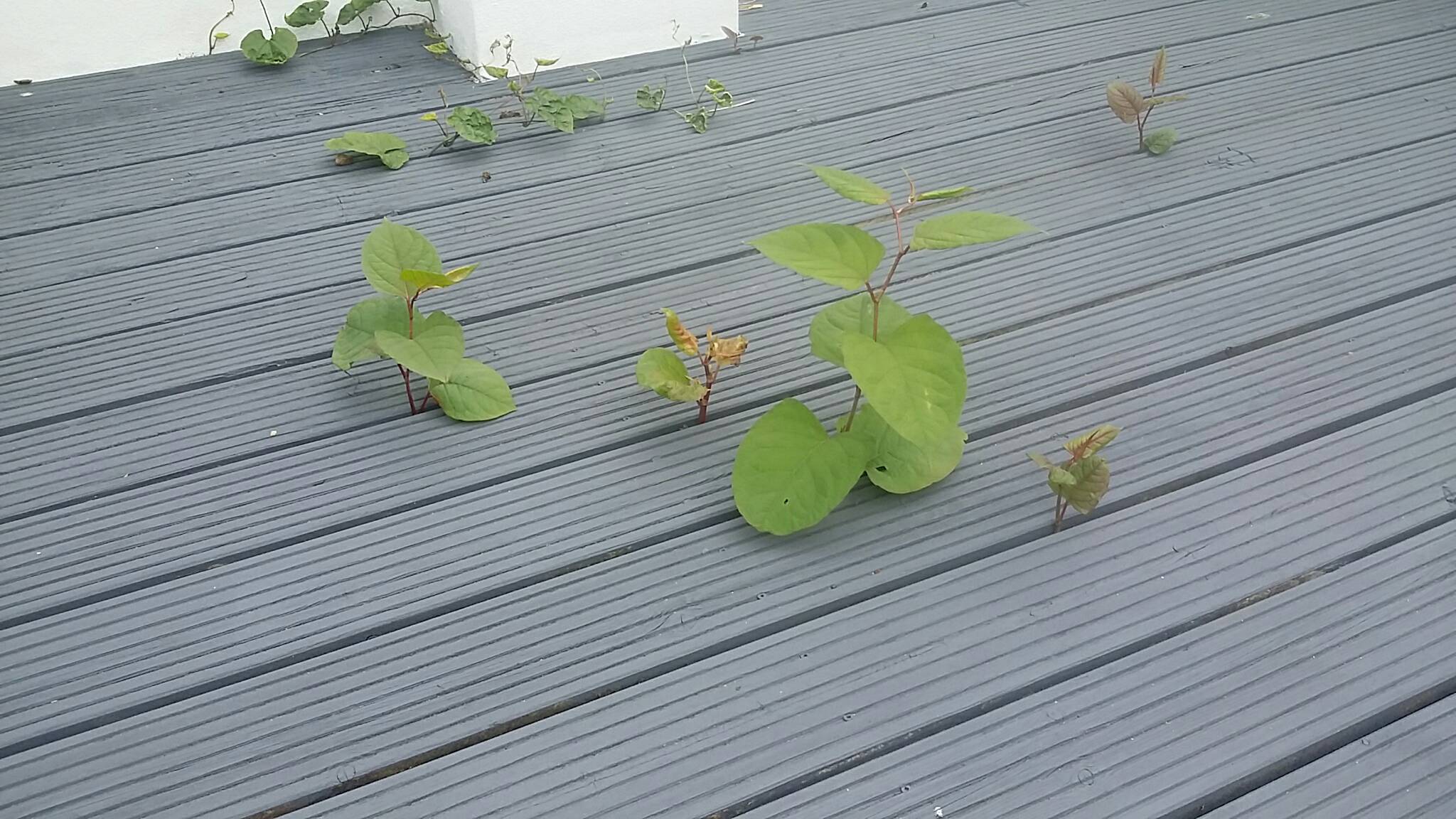
In its drive to expand, Japanese knotweed will exploit existing weaknesses, gaps or cracks in property, underground services, walls, concrete, foundations, fences, out-buildings and conservatories. As it grows and expands, it will increase the expansion of the gap or crack and cause damage to walls, ruin garden fences and break through into buildings.
In its search for moisture, the rhizomes will forge their way through structures without regard for their purpose – including underground pipes and electrical cables.
In addition to the damage root systems can cause, it can also cause problems above ground. Japanese Knotweed grows large ‘bamboo-like’ stalks. These stalks grow together in tight clumps. They grow large green ‘shovel-shaped’ leaves which can cover a wide area. This growth will block areas, recuse usable areas of the garden and also prevent natural flora and fauna from growing.

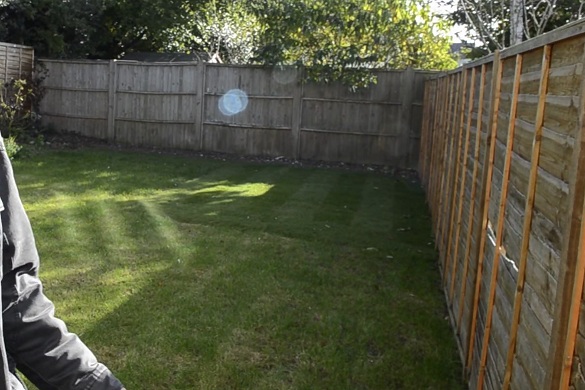
On this residential knotweed removal contract, over a period of three days, we completed full excavation to a depth of 1.3 metres with all waste being removed to landfill. We also installed root barriers that would ensure any potential fragments of rhizome would not be able to grow into new plants. The area offsite will continue to be treated under a herbicide treatment programme to ensure no further problems will occur in the future. The picture shows how clean and tidy the garden was left after we’d completed the contract.
Discover whether combined treatments for knotweed removal, including herbicide and excavation can provide effective solutions suited to you, your home or your site.
Who's responsible for knotweed discovered on new-build sites? In this article we answer the question; Is there a TA6 form for UK developers?