


Ben Lindley, Company Director at Japanese Knotweed Ltd. Last reviewed on 15th October 2026.
In this article we’ll take a look at how this year’s El Niño is predicted to affect the UK’s winter, what affect that will have on the growth of Japanese knotweed in winter, and explore effective knotweed surveying and treatment options that can be carried out during the colder months.
HOW WILL EL- NIÑO AFFECT THE UK’S WINTER?
According to the Met Office, contrary to popular opinion, this year’s unprecedented El Niño is not more likely to bring freezing temperatures to the UK. Although there are some concerns about its effect on the Polar Vortex, which could theoretically bring freezing Arctic weather further south towards the UK, the Met Office expects the El Niño influence to cause milder temperatures and wetter conditions, with an increased chance of winter storms
WHAT DOES THIS MEAN FOR JAPANESE KNOTWEED IN WINTER?

Aside from our site teams needing watertight Japanese Knotweed Ltd branded PPE, it’s business as usual. Japanese knotweed does not die off in the winter, it just goes dormant underground. Key signs to look for over winter include:
- Autumn foliage: Like many other deciduous plants, Japanese knotweed leaves turn yellow and reddish in autumn, then drop off leaving bare canes.
- Brown canes: Once the foliage has gone, all that is left above ground are dark brown, brittle canes. This does not signal Japanese knotweed plants are dead.
- Underground rhizomes: Japanese knotweed lies dormant in an extensive network of rhizomes (roots) underground. These are dark brown on the outside with yellow to orange centres.
- Red buds: As winter comes to an end, new red buds will appear on the crown, which will form new shoots in early spring. Buds may be present earlier during a particularly mild winter – Japanese knotweed shoots have been recorded as early as late January!
JAPANESE KNOTWEED WINTER TREATMENT OPTIONS
Winter can actually be an ideal time to tackle Japanese knotweed infestations, especially for larger infestations or sites requiring excavation. We offer a range of winter knotweed services for all sites, including:
Site surveys: The brittle canes and old crowns left behind after foliage has dropped are a tell-tale sign of a Japanese knotweed infestation, which our experienced surveyors can recognise even if they are fallen or broken.
Brush cutting: Although this does not remove the living parts of the plant underground, removing canes and other vegetation can help with access allowing spring knotweed treatments to progress faster.
Excavation and removal: for large Japanese knotweed infestations or development sites requiring a rapid treatment plan, complete excavation of the rhizome system and disposal to an appropriate licensed facility may be the best removal option. Excavation MUST be carried out by experienced professionals as rhizome networks are extensive (up to 7m beyond above-ground stands) and smaller rhizomes can be paler, resembling tree roots. The plant will regrow in spring if even tiny fragments are left behind.
HOW WILL JAPANESE KNOTWEED BEHAVE IF EL- NIÑO CAUSES A MILD WINTER?
As with any milder winter, which are becoming more common in the UK due to climate change, Japanese knotweed is more likely to emerge from dormancy earlier. Early signs to look out for include red buds coming from older crowns, followed by green to red asparagus-like shoots emerging from the vicinity of older canes or out the ground if these have been cleared.
PROFESSIONAL SUPPORT IS AVAILABLE
Whether you’re a homeowner, a developer or a property or land manager, getting a professional Japanese knotweed survey carried out as early as possible will give peace of mind and prevent any negative impacts on development timescales and property prices and sales.
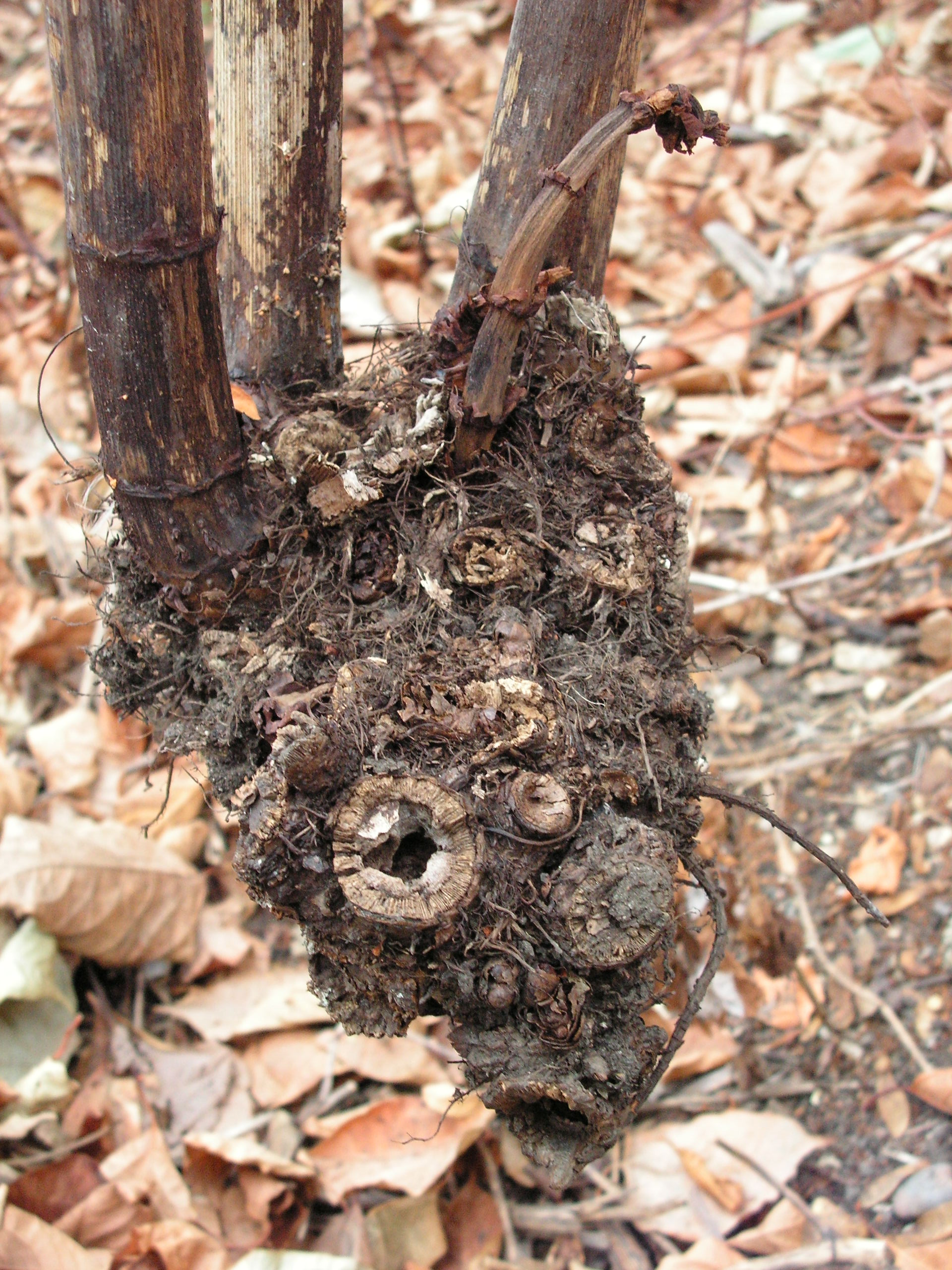
Japanese knotweed foliage dies off in winter but the plants’ rhizome networks are still alive underground
Frequently Asked Questions
Can Japanese knotweed be treated in winter? Yes, although the above ground foliage dies off, Japanese knotweed rhizomes remain viable underground, so winter is a good time for certain works like “brush cutting” (removing dead canes), excavating rhizomes and preparing a site for future treatment.
Why should dead Japanese knotweed canes be cut back in winter? Cutting back dead canes helps clear the site and improves access for other works. It also prepares the area for the next growing season making surveys and early treatments easier.
Do I need professional help to manage Japanese knotweed over winter? Professional support can help ensure that dead canes, rhizomes and affected soil are managed correctly. A specialist contractor can assess the site, recommend the most appropriate winter works and design an effective management plan for the following growing season.
Can I remove Japanese knotweed canes myself? All cut material must be handled correctly and disposed of at a suitably licenced facility, in accordance with UK law, to prevent the spread of Japanese knotweed. As underground rhizomes are still viable, and even small fragments can lead to regrowth, its best to get professional advice and support.
Is winter a good time to excavate Japanese knotweed rhizomes? Winter can be a good time for Japanese knotweed excavation, subject to the weather, ground conditions and site access. On commercial sites, it can also be a time when other works are quieter, leading to a reduced impact on daily activities or construction schedules.