

John Butcher, Lead Commercial & Legal Surveyor, at Japanese Knotweed Ltd.
Last reviewed on .
The rise in Japanese Knotweed Surveys: Why Sellers and Buyers Are Seeking Certainty
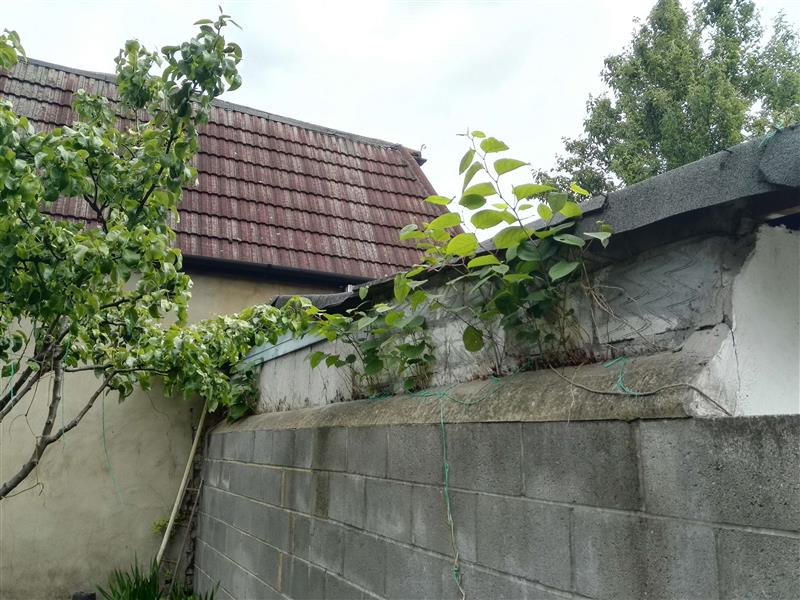
In today’s property market, one trend is becoming increasingly clear as the knotweed growing season ramps up: more homeowners and buyers are commissioning Japanese knotweed surveys for property sales before the process progresses. In this article we explain why this trend is key to the success of property sales, and the consequences of not being completely honest about knotweed.
Searches such as “TA6 knotweed question”, “knotweed survey before selling house”, “can I say no to knotweed on TA6”, and “do I need a knotweed survey when buying a house UK” are rising – and for good reason.
At the centre of this shift is one key issue: confidence.
Knotweed surveys are increasing in the UK property market
Japanese knotweed is no longer just an environmental issue, or property concern: it is a legal, financial and conveyancing risk.
- Mortgage lenders may refuse to lend without evidence of management
- Sales can fall through due to uncertainty or poor disclosure
- Misrepresentation claims (where knotweed is failed to be reported by either the seller or the surveyor) can cost thousands in compensation
As a result, both buyers and sellers are becoming more savvy – knotweed surveys are moving from reactive to preventative.

The TA6 Form: Why “No” requires absolute certainty
One of the biggest drivers behind this trend is the TA6 Property Information Form. This document is mandatory – required to be completed by sellers in England and Wales to provide crucial details about a property to potential buyers. The new edition – updated on 30 March 2026 covers boundaries, disputes, alterations, parking, and environmental factors like flooding and energy efficiency – it also covers Japanese knotweed.
When selling a property, you must declare whether Japanese knotweed is present. However:
- You can only answer “No” if you are certain no knotweed exists on or near the property
- This includes within 3 metres of the boundary, even below ground
The big challenge: Most homeowners are not qualified to identify knotweed rhizomes underground.
Read what our legal advisor says here about the TA6 form.
The risk of guessing!
Many sellers assume: “I’ve never seen it, so I’ll tick ‘No’” but this is where problems arise.
- Incorrect answers can lead to legal claims for misrepresentation
- Buyers can claim for treatment costs, loss of value, and legal fees
- Issues are often discovered after completion, when it’s too late to renegotiate
A new seller mindset: Confidence beats assuming
Property is probably the most expensive purchase anyone will make, so any risks associated with that must be addressed not ignored. This is why more sellers are now searching:
- “How can I prove there is no knotweed on my property?”
- “Do I need a knotweed survey before selling?”
- “Can I be sued for knotweed after sale?”
The simple answer is to get a professional survey.
A specialist knotweed survey provides a comprehensive report that allows sellers to:
- Confirm presence or absence – and crucially – with evidence
- Accurately complete the TA6 form
- Provide reassurance to buyers and lenders
- Avoid delays, renegotiation, or legal disputes
As guidance highlights, answering “No” requires complete certainty, not assumption.
Buyers are driving demand too: They’re increasingly requesting a knotweed survey
It’s not just sellers – buyers are also pushing this trend.
Searches like these are increasing as awareness grows:
- “knotweed survey before buying house”
- “should I get a knotweed survey UK”
- “knotweed found after purchase what can I do”
Buyers are becoming more cautious because, with plenty of knotweed information to hand, they know:
- Knotweed can affect mortgage approval
- It may reduce property value
- It can lead to unexpected remediation costs
- Standard surveys may not fully assess invasive species risk
For these reasons, in many cases, lenders or surveyors will recommend a specialist knotweed report before exchange.
David Richards, Solicitor of Roach Pittis who is a Japanese knotweed misrepresentation and private nuisance claims specialist states: “From a legal perspective, Japanese knotweed remains a significant risk in residential property transactions. I advise clients daily on disputes arising specifically from incorrect TA6 disclosures. Sellers who rely on assumption rather than evidence expose themselves to claims for treatment costs, diminution in value and legal fees. Commissioning a specialist knotweed survey before sale is increasingly becoming best practice rather than a precaution.
“Not known” is no longer good enough
Another growing trend is sellers answering “Not known” on the TA6 form.
While this avoids immediate liability, it often:
- Raises red flags for buyers
- Triggers further investigations
- Causes delays in conveyancing
- Leads to renegotiation or buyer withdrawal
In reality, “Not known” often results in the buyer commissioning a survey anyway which inevitably slows the process up – increasing the risk of conveyancing failure. As anyone knows who’s bought or sold a house – sales can easily break down – nothing is certain until final exchange of contracts and even then buyers can still pull out.
The commercial impact: Speed, certainty and value
For both parties, the benefits of a knotweed survey are clear:
For sellers
- Confidence to tick “No” correctly on the TA6 form
- Reduced risk of legal claims
- Faster, smoother transactions
- Stronger negotiating position
For buyers
- Clarity before committing
- Reduced risk of hidden costs
- Better mortgage outcomes
- Peace of mind
Why this trend will continue
Several factors are driving continued growth in knotweed surveys:
- Increased legal awareness around misrepresentation
- Greater lender scrutiny
- More educated buyers
- Seasonal visibility issues (knotweed dies back in winter)
Put simply: Uncertainty is now seen as a risk and surveys remove that uncertainty.
Final thoughts: Certainty is the new standard
The UK property market is changing – people are more aware of the risk of ignoring knotweed, and how to overcome those risks. Where once sellers might have relied on assumption, today’s approach is:
✔ Evidence over guesswork
✔ Transparency over risk
✔ Professional surveys over uncertainty
For sellers, the goal is simple: Be confident when ticking “No” on the TA6 form – not hopeful.
For buyers, it’s about: Knowing exactly what you’re purchasing before you commit, and enabling positive loan outcomes.
If you’re thinking of buying or selling a property in the UK – be proactive and book a survey today.