

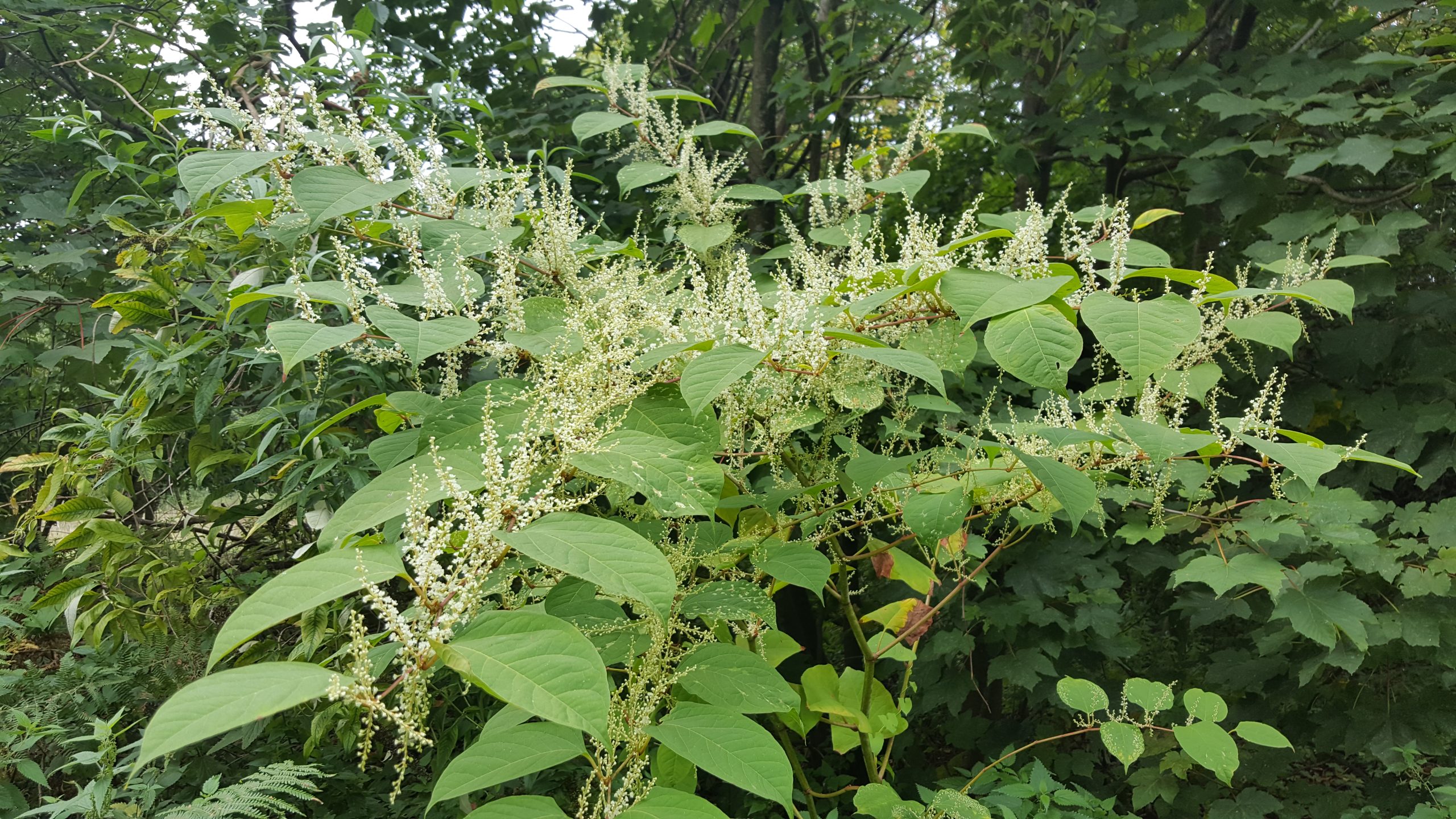
Case study: £28,500 settlement sought following Japanese knotweed misrepresentation
When buying a property, discovering Japanese knotweed after completion can lead to unexpected costs, reduced property value and potential legal action. In this case study, our long-term legal partner describes how a homeowner sought a £28,500 settlement after alleging that Japanese knotweed was not disclosed during the property sale. The property was affected by Japanese knotweed, resulting in a claim for substantial financial losses. We explain how our specialist survey and expert evidence helped assess the extent of the infestation, supported the legal claim and provided the information needed to move the case forward.
Background
The legal firm’s client purchased a residential property and, before exchange of contracts, received the standard Law Society Property Information Form (TA6) completed by the sellers. Within that form, the sellers confirmed that to their knowledge the property was not affected by Japanese knotweed.
Following completion of the purchase, they discovered a significant Japanese knotweed infestation within the property. Given the potential impact of knotweed on property values, mortgageability, future saleability and remediation costs, they sought legal advice regarding their position.
Investigation
The first step was to obtain specialist expert evidence concerning the extent, age and origin of the knotweed infestation.
Japanese Knotweed Ltd was commissioned to provide a specialist Japanese knotweed survey. The lead surveyor (also acting as expert witness) concluded that:
- Japanese knotweed was present within the property boundary.
- The infestation was mature and estimated to be between five and ten years old.
- On the balance of probabilities, the infestation pre-dated the completion of the property purchase.
- The neighbouring property also contained a substantial infestation which was likely to be the original source of the encroachment.
- Japanese knotweed material could be identified within photographs taken before the purchase.
Importantly, the our surveyor concluded that the infestation was likely to have been present when the sellers completed the TA6 form.
Defendants’ response
The sellers denied liability. Amongst other arguments, they contended that:
- They were unaware of any Japanese knotweed affecting the property.
- The purchasers had commissioned their own survey prior to purchase.
- A previous TA6 form completed by earlier owners had also indicated that the property was not affected by Japanese knotweed.
- Any losses should be limited to treatment costs rather than any reduction in the property’s value.
The sellers also relied upon a historic building survey undertaken several years before the sale.
Detailed review of the evidence
Upon reviewing the historic survey, the law firm identified an important point. Although the survey had not identified Japanese knotweed, it expressly stated that no specific inspection had been undertaken to determine whether invasive plant species were present.
In other words, the survey did not establish that Japanese knotweed was absent. It merely confirmed that the issue had not been investigated.
They also reviewed the photographs contained within the survey documentation. Our surveyor concluded that Japanese knotweed aerial growth was visible within those photographs.
Assessing the financial loss
Establishing liability is only part of the process. It is equally important to quantify the losses suffered by the purchaser.
The legal firm therefore instructed a Chartered Surveyor specialising in valuation disputes. Following inspection and analysis, they concluded that the presence of Japanese knotweed had caused a diminution in value of £28,500 at the date of purchase.
The valuation report considered not only treatment costs but also market stigma, future saleability concerns and the impact the infestation would have had on a willing purchaser’s assessment of the property’s value.
Legal issues
Cases involving Japanese knotweed often raise difficult legal questions.
A seller may argue that they were unaware of the infestation. Equally, purchasers will often have obtained their own survey before proceeding with the purchase.
However, each case turns on its own facts. The critical issues frequently include:
- Whether the property was affected by Japanese knotweed at the relevant time.
- Whether the seller’s replies to pre-contract enquiries were accurate.
- Whether the purchaser relied upon those replies.
- What financial loss flowed from the alleged misrepresentation.
In this matter, the expert evidence we provided the legal firm’s clients provided strong support for their claim.
Outcome
Following extensive investigations and the preparation of detailed pre-action correspondence, a claim was advanced seeking damages of £28,500 arising from the alleged misrepresentation concerning Japanese knotweed.
This case demonstrates the importance of obtaining specialist legal and expert advice where invasive species are discovered after a property purchase. It also highlights the significance of the information provided during the conveyancing process and the serious consequences that can arise if those representations prove to be inaccurate.
Because these are serious issues that need to be evidenced and dealt with by professionals experienced in Japanese knotweed law, we’re able to provide help and assistance to people facing similar issues. If you have any concerns about Japanese knotweed and would like some expert advice use the form below to be put in contact with our legal partner.