

Ben Lindley, Company Director at Japanese Knotweed Ltd. Last reviewed on 27th May 2026.
How to identify Japanese knotweed and why so many plants get mistaken for it
Every year across the UK, thousands of homeowners, buyers, landlords and construction companies ask the same question: “Do I actually have Japanese knotweed?” In this article knotweed experts explain why this question causes concern for so many people in the UK, lists the most common plants people think are knotweed – but are not, and most importantly, how to get peace of mind when the answer to that question is “yes – you have knotweed”.
The problem is many common UK plants are regularly mistaken for Japanese knotweed. And while some cases turn out to be harmless, others genuinely require urgent professional attention. So it’s understandable that people become concerned when they spot an unfamiliar plant in the garden or on a development site and wonder whether it is ‘the dreaded knotweed’. This blog will help you to correctly identify knotweed.
Plants commonly mistaken for Japanese knotweed
One reason people struggle to identify knotweed is because several UK plants look similar, and as knotweed thrives in most environments, the chances it’s near you is quite high! But being a green leaved, tall plant with white flowers, it’s very similar to other plants you commonly see around you, and to an untrained eye can be easily missed or overlooked.
Common lookalikes include:
- Bindweed
- Bamboo
- Russian Vine
- Dogwood
- Lilac
- Himalayan balsam
- Broadleaf dock
- Red bistort
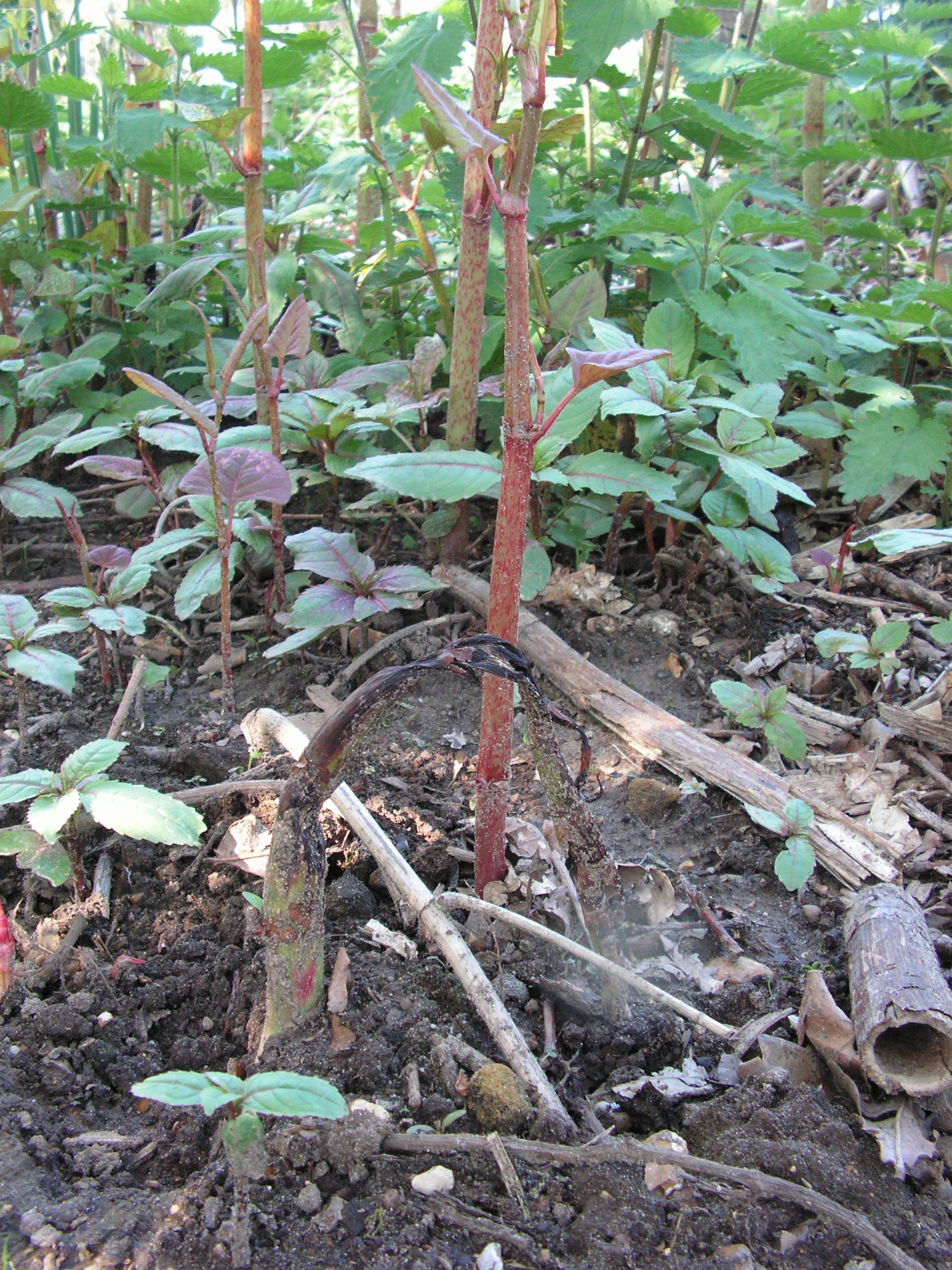
Online photos alone are often unreliable. The leaf structure for example of some of these plants is similar in colour and shape, but look closer and distinct differences can help with correct identification. Below shows the distinct characteristics of knotweed – in particular its leaves:
- Leaves are a bright ‘grass’ green colour
- Leaves are shovel shaped at their base with a pointed tip
- Leaves grow from stems in a distinct zig-zag pattern
- Stems are vertical and purple speckled
- Stands of knotweed form canopies that are so dense they can block out sunlight
- In winter the stems turn brown and brittle

Click the link below to access a full guide to what knotweed actually looks like; it’s key characteristics and how it changes through the seasons.
What Does Japanese Knotweed Actually Look Like?
Why homeowners are booking knotweed ‘peace of mind’ surveys
There has been a major increase in what we’re now calling “peace of mind” knotweed survey requests in 2026. This is mostly because the majority of UK homeowners are now aware of the implications of having knotweed on their property and want certainty before putting it on the market and confidence when completing a TA6 form.
A knotweed survey provides evidence of having knotweed (and a management plan in place) or equally evidence there is no knotweed – either is essential to know when listing their house for sale.
Buyers are also commissioning surveys after mortgage valuations, surveyor comments, neighbour concerns or suspicious vegetation sightings. Buyers also want this confidence before placing an offer. The survey is therefore a vital piece of informaiton whatever the outcome or decision.
Construction Sites Face Even Greater Risk
For developers and contractors, unidentified knotweed can become a serious project risk. If discovered late during excavation, enabling works, earthworks or site clearance it can lead to:
- programme delays and rescheduling
- procurement issues
- additional disposal costs
- environmental compliance issues
This is why pre-construction invasive species surveys are becoming increasingly common across the UK, it provides commercial decision makers with teh informaiton required to proceed with confidence and factor in knotweed remediation in to planning adn scheduling.
Can I identify Japanese knotweed myself?
You may recognise suspicious characteristics, but professional confirmation is strongly recommended. This is because knotweed changes seasonally, many plants look similar and knotweed rhizomes are hidden underground. Misidentification can lead to unnecessary panic and failed DIY treatment. It can impact property transactions and if not dealt with will spread onto other properties which may lead to legal implications.
Expert opinion
Jennifer Holmes from Japanese Knotweed Ltd comments: “Even if you have knotweed professionally identified, don’t try to remove suspected knotweed yourself. Why? Because over 90% of DIY attempts result in unsuccessful eradication and spreads the infestation. Professional contractors that are qualified and licensed to provide knotweed services will provide valuable advice on what’s required to either control or remove the knotweed – knowing what actually works and is compliant with all knotweed regulations.”
What happens during a knotweed survey?
A professional survey typically includes:
- A site inspection (walk-over) will be pre-arranged and on the day carried out by one of our highly qualified surveyors.
- Any questions you may have will be answered on the day, otherwise everythign will be outlined in a report.
- The surveyor will look for invasive plants and provide correct plant identification
- Often a risk assessment will be included – typically for larger or commercial sites, challenging terrains and sites of specific scientific interest
- Photographs of the site will record the surveyor’s findings, which will be provided in the form of a report
- Treatment recommendations will be provided in a Management Plan and sometimes this will include multiple options, all of which will be costed
For property sales or development projects, the documentation that comes with our survey can provide valuable reassurance and compliance evidence, helping you to achieve a sale, or decide on a purchase or project approval – with confidence!
Frequently Asked Questions
How do I know if I have Japanese knotweed? Japanese knotweed typically has tall hollow and speckled canes, shovel-shaped leaves and rapid seasonal growth, but many plants are commonly mistaken for it.
What plants look similar to Japanese knotweed? Bindweed, bamboo, Russian vine, dogwood and Himalayan balsam are among the most common lookalikes.
Should I get a knotweed survey before selling my house? Many sellers now choose professional surveys to gain confidence when completing TA6 property forms and avoid future disputes.
Can Japanese knotweed affect a mortgage? Some lenders may require evidence of treatment or a professional management plan before approving lending.
What happens if knotweed is found on a construction site? It can lead to projects being put on hold, excavation controls, waste management requirements and contract delays if not managed properly.
People Also Ask
Do surveyors check for Japanese knotweed? Some surveyors may flag suspected knotweed (but not all can correctly identify it). Specialist invasive plant surveys provide more detailed identification and assessment.
Can Japanese knotweed grow through concrete? Japanese knotweed exploits existing weaknesses and cracks but is often misunderstood regarding structural damage.
Is Japanese knotweed illegal? It is not illegal to have knotweed on your land, but allowing it to spread into the wild may breach UK legislation.
What should I do if I think I have Japanese knotweed? Avoid disturbing the plant and seek professional identification and advice.