


Ben Lindley, Company Director at Japanese Knotweed Ltd. Last reviewed on 3rd March 2026.
knotweed in springtime: what everyone should know to help identify and deal with it
With spring being the time knotweed re-emerges from its winter dormant state, this Japanese knotweed: Spring ID & removal guide offers a clear, safe plan to identify the plant, take the crucial first actions, and protect your property effectively, while avoiding common mistakes that can make the problem worse.

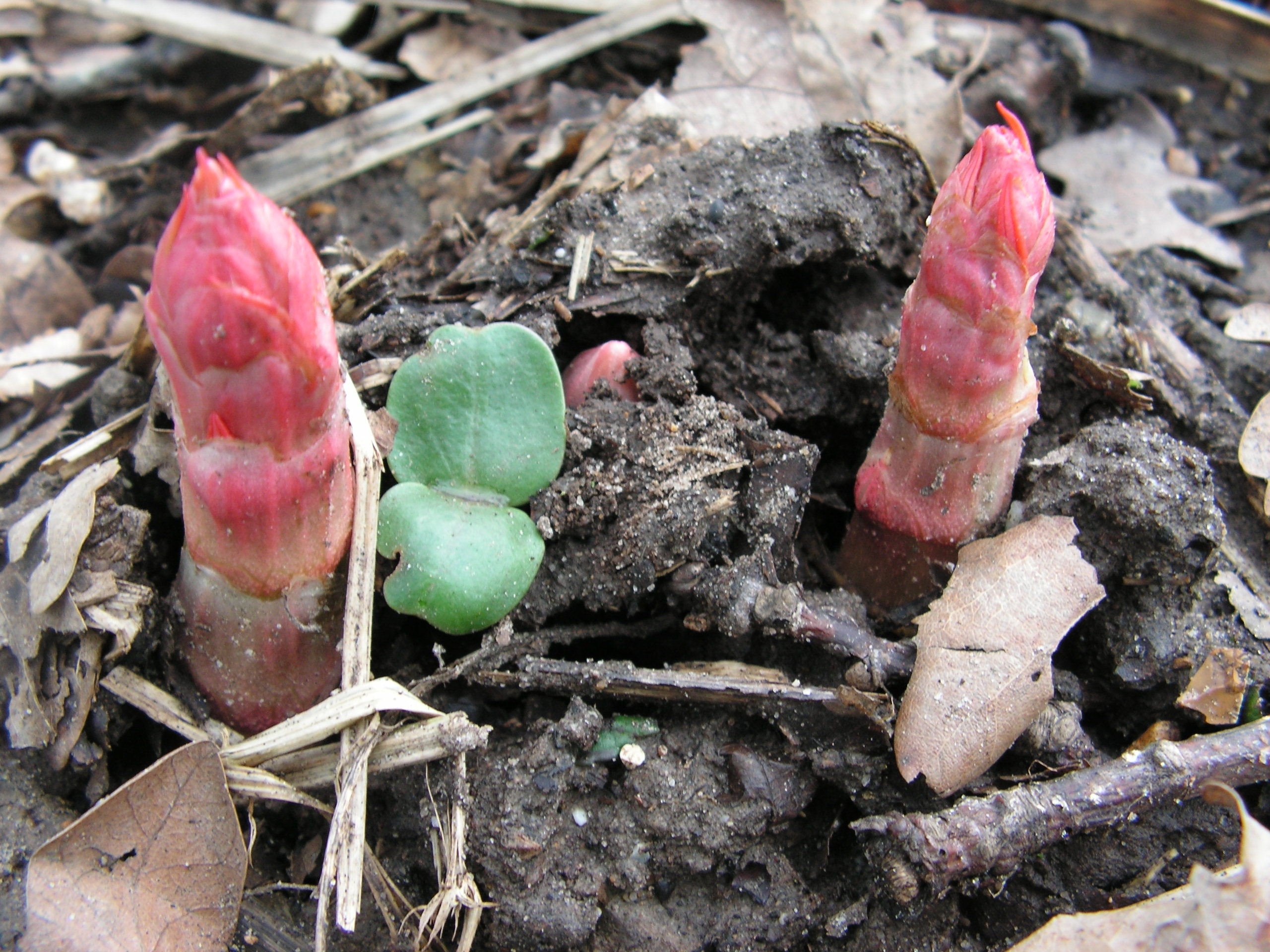
The image above was taken by one of our surveyors on 3rd March. It shows knotweed shoots from a piece of rhizome that was not even rooted in the ground – proving that knotweed will grow from fragments of root even when not underground.
Have you spotted strange, reddish-purple shoots pushing up in your garden this spring? If they look a bit like asparagus and are growing incredibly fast, stop what you’re doing. You might be looking at the early signs of Japanese knotweed, and what you do next is critical.
It’s easy to mistake this plant for just another stubborn weed, but it’s more like an iceberg – what you see is only a fraction of a destructive system hidden underground, with a massive root network that can spread over 20 feet from the main plant. It grows with enough force to exploit weak points in pavements, patios, drains, and even home foundations. This makes it one of the most serious invaders a homeowner can face.
How to Identify Young Knotweed: The 3 Telltale Signs in Spring
In early spring, Japanese knotweed gives itself away with some very unusual characteristics. Forget about searching for a typical green weed; the first signs are far more distinct. Look for reddish-purple shoots pushing up from the ground, either as single shoots or often in clusters. These early growths are frequently compared to asparagus spears because they are thick, rounded, and have a pointed tip, and they can grow with alarming speed.
As these shoots get taller, their leaves begin to unfurl. Initially rolled up, they open into a shape that is another key identifier. A mature knotweed leaf is often described as being shield shaped, but with one crucial difference: it has a distinctly flat, squared-off base where it meets the stem. This unique leaf shape helps separate it from other common garden plants like bindweed or lilac.
To confirm if that suspicious plant is knotweed, run through this simple checklist.
- Colour and shape: Are the shoots reddish-purple and thick like asparagus spears?
- Young leaves: Are they rolled up at first, opening into a shield shape with a flat base?
- Growth pattern: Is the plant growing in a dense clump and shooting up very quickly?
- Zig-zag stems: Does it have straight stems or are they zig zagging?
If you’re looking at your property and nodding your head to these points, you are almost certainly looking at young knotweed. Of course, several other plants have similar features, so knowing how to tell it apart from common look-alikes is the next important step.
Knotweed Look-Alikes: How to Tell It Apart from similar looking plants
Since several common garden plants can be mistaken for knotweed, a positive identification is key to avoiding unnecessary panic or, worse, inaction. While the reddish shoots and shield-shaped leaves are strong clues, a few look-alikes can still cause confusion. Learning the simple features that set knotweed apart from its main doppelgängers, like bamboo and bindweed, is the best way to be certain about what you’re dealing with.
The clearest giveaway is in the stem structure. As knotweed matures, its green, purple-speckled stems are hollow and grow in segments, much like bamboo. However, knotweed has a tell-tale feature that bamboo lacks: it grows in a distinct zig-zag pattern. Look closely where each leaf joins the main stalk; you will see the stem juts out at a slight angle, creating a jagged, uneven line all the way up.
This zig-zag growth immediately helps distinguish it from other plants, whose canes are almost always perfectly round and straight. Confusion with bindweed is also common, but the difference is in strength and habit. Bindweed has thin, weak vines that must wrap around other plants for support, and its leaves are typically more arrow-shaped. Knotweed, by contrast, stands upright on its own sturdy stems.
Even some shrubs, like certain types of dogwood, can cause a moment of doubt with their reddish spring growth. A quick check, however, reveals their stems are woody and solid all the way through, not hollow. Getting this identification right is more than just a gardening task; it’s a sign of a much larger and more destructive problem hidden underground.
Ok so you’ve identified what you think is knotweed – what do you do next? Actually what’s more important is what you don’t do next!
STOP! The 3 Critical Mistakes That Make a Knotweed Problem Worse
Knotweed spreads from tiny root pieces, so your first instinct may be to grab a spade or pull it out – but this is the most damaging thing you can do. Common gardening tactics are not just ineffective against this plant; they actively help it take over. Attempting to remove knotweed yourself is the primary way a small patch becomes a full-blown crisis, and the answer to whether you can do it is almost always no.
To prevent accidentally spreading knotweed and turning one plant into dozens, you must avoid these actions at all costs:
- DO NOT CUT IT: Mowing or using a weed whacker sprays tiny stem and crown fragments across your property. Each one can potentially root and start a new plant.
- DO NOT PULL OR DIG IT: You will never get all of the underground rhizome system. Every piece of root left behind will simply grow into a new clone of the original plant.
- DO NOT COMPOST IT: Knotweed can survive the composting process. Adding it to your green waste bin or compost heap is like planting a seed bomb that you’ll later spread across your entire garden. Aside from that it’s illegal to bin/compost/burn/tip knotweed.
Because it is so resilient and easily spread, knotweed cannot be treated like normal garden waste. You can’t just throw it away. In fact, it must be disposed of as ‘controlled waste’ – a legal classification that ensures it’s handled safely and doesn’t contaminate new areas. This underscores the seriousness of the plant and highlights why getting rid of it properly nearly always requires professional help.
Your Safe Action Plan: What to Do Immediately If You Suspect Knotweed
Seeing these signs can be worrying, but your first step is simple and calm: document what you see. Take clear, close-up photos of the shoots, leaves, and the overall patch of plants. Taking a photo of the wider area is also helpful to see where on the land it’s growing, whether it’s near to water or other properties. This visual evidence is invaluable for a proper identification, which is the critical starting point. Don’t touch or try to pull the plant; just capture good pictures from several angles. This simple act of gathering information is the first move in taking control of the situation without making it worse.
Next, it is absolutely essential to create a “no-go” zone around the suspected plants. Use some rope, garden canes, or anything visible to mark off the area, keeping a buffer of at least seven feet around the outermost growth. This is the single most important action for stopping the accidental spread of knotweed. It prevents children, pets, or even a well-meaning landscaper from walking through the patch and unknowingly carrying a tiny, viable piece of root to another part of your property on their shoes.
With the area documented and secured, the final and most important step is to contact an accredited knotweed specialist. While online guides are helpful, many harmless plants can be mistaken for knotweed. A professional can offer a definitive identification, often from your photos, and explain your options. Seeking expert advice is the best way to get rid of knotweed before a small problem becomes a major financial headache that can seriously impact your property’s value.
Now you know what to do, and what not to do the next step is easy – simply get in touch with a knotweed expert today or use our online tool.