

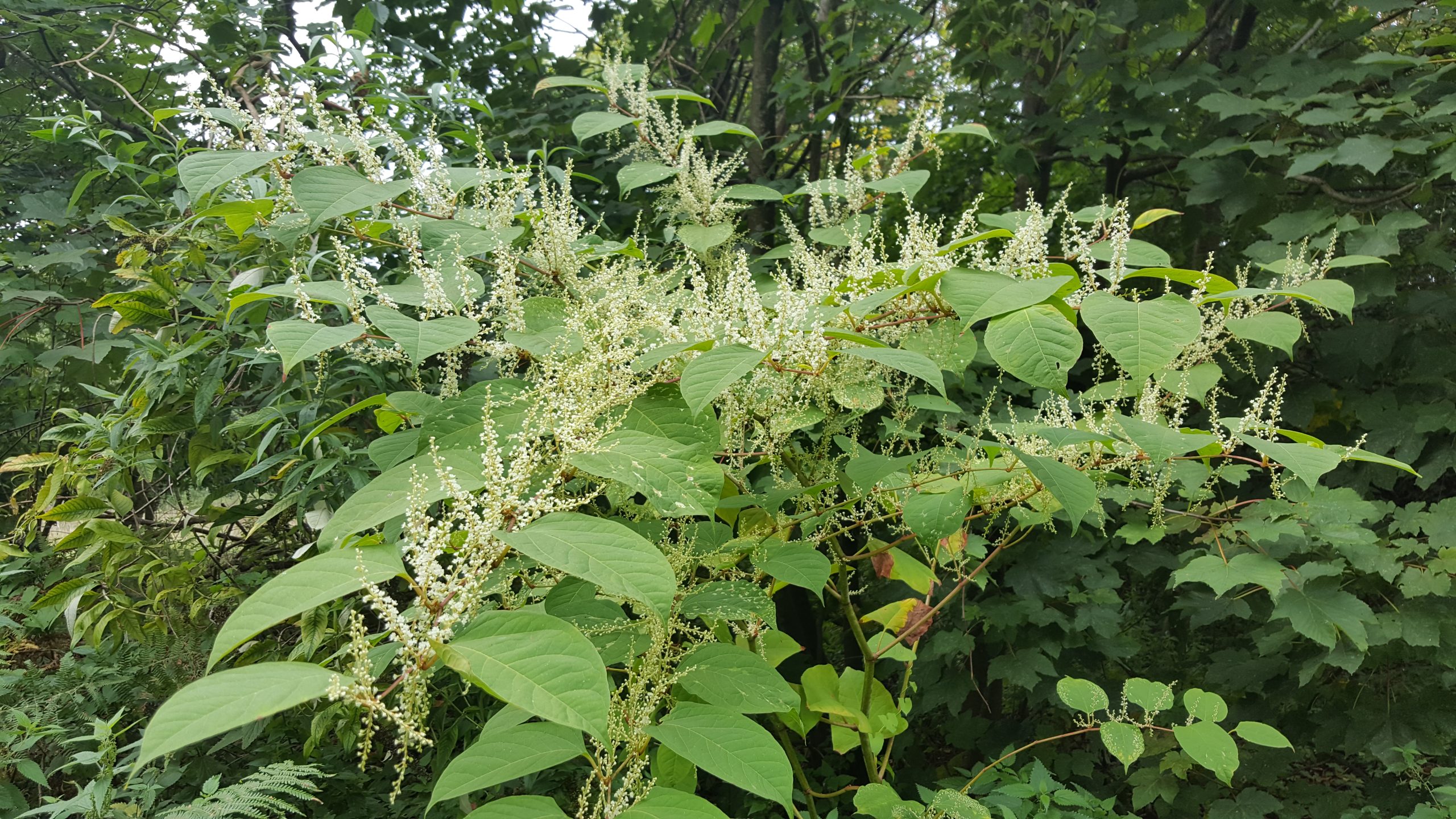
Do you know your knotweed from your dogwood?
There are some plants in the UK that look similar to Japanese knotweed, such as Russian Vine, Bindweed, Himalayan Honeysuckle, Broadleaf Dock and Dogwood. Search volume figures show that more than 13,000 Brits are unsure what Japanese knotweed looks like, so if you get it wrong – you’re not alone!
Japanese knotweed is an extremely invasive weed that can spread through simple, everyday activities. Whether you’re a keen gardener, a DIY enthusiast, or a homeowner, you could unknowingly be contributing to the spread of this destructive plant. This is especially concerning, as it’s estimated 13,340 Brits are clueless as to what the plant actually looks like.
If you confuse the invasive weed with a harmless plant you could end up wreaking havoc on your own property and your neighbours, which can lead to costly treatment plans and potentially private nuisance claims from your neighbour.
If the knotweed infestation is left unchecked for several years, it can spread and cause a range of issues including impeding amenity land use, increase land use change costs, material damage to hard-standing structures, devaluation of property and legal claims. We know of (and assist with) 100’s of private legal claims every year – it’s important to be fully informed whatever side of the fence knotweed is on, and it all starts with being able to identify it or know where to turn to for professional identification.
It’s always best to triple-check what is lurking in your garden, as an early diagnosis could save you the headache in the long run. Here are the main characteristics to help identify this invasive weed.
- Look for tall stems with shovel-shaped leaves that are starting to turn yellow and orange.
- Check for a clear zig-zag leaf growth pattern is its most defining characteristic
- Note the height of the plants; they remain tall, around 2-3 metres.
- The small clusters of creamy-white flowers.
- As the leaves fall, the canes or stems become more noticeable as most stay erect in situ.
- You may see some canes that have broken – they should be hollow and brown if it’s knotweed.
Is it Japanese knotweed? – Our top 3 tips to help you identify knotweed
To the untrained eye, knotweed can be easily passed by or ignored, mistaken for lookalike plants with similar structure or characteristics. It also changes characteristics throughout the year, you can see what knotweed looks like through the seasons here. Plus our knotweed expert’s have provided their top 3 tips to help identify the real suspect:

The knotweed flowers (which are prevalent right now) are creamy-white and very small, forming in tight clusters along thin single stems.


The zig-zag pattern of the stems is a clear indicator to look out for. The stems will be a darker green than in summer, but still have the mottled purple pattern.
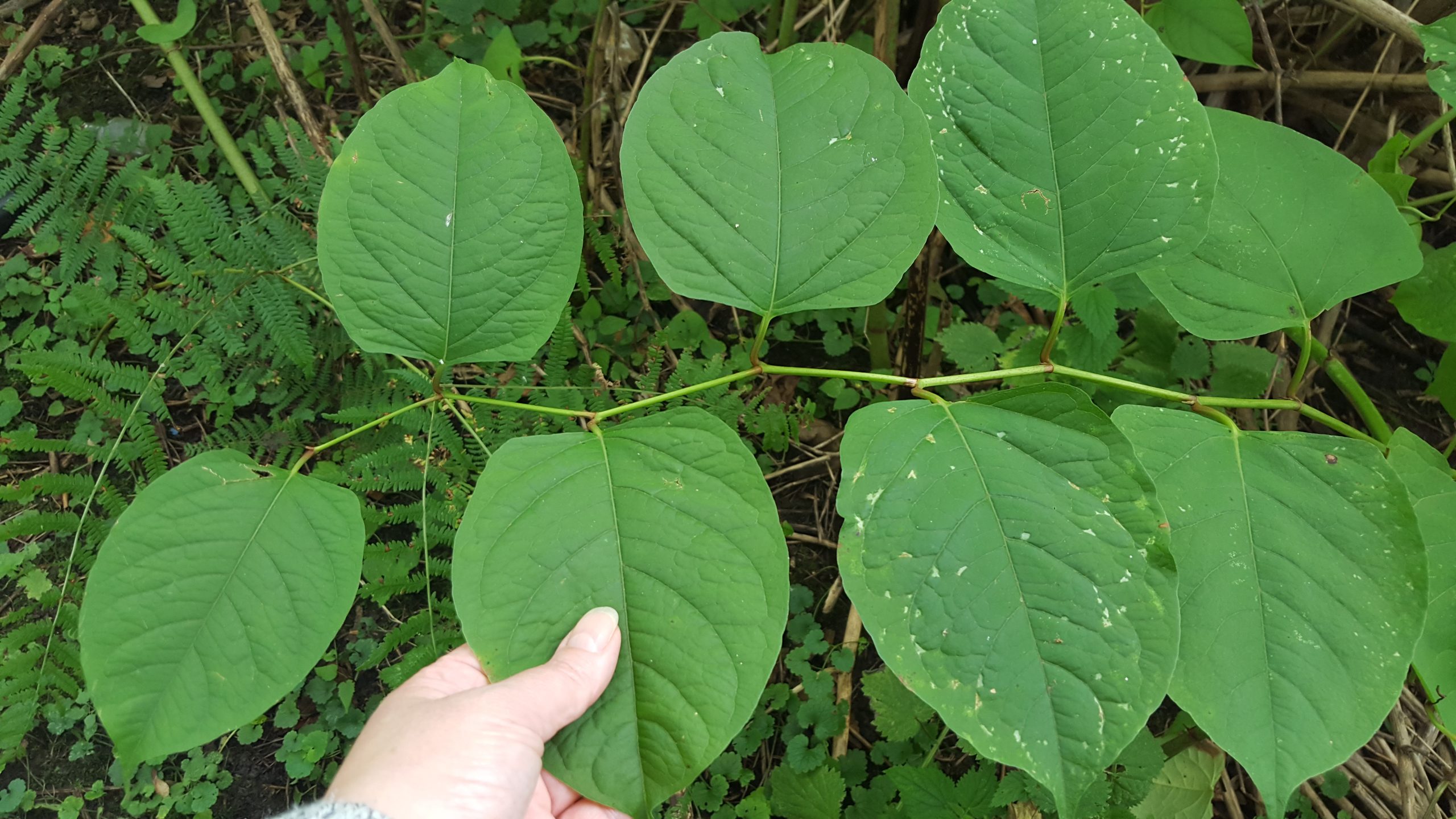
The leaves are smooth and have a distinct shovel-shape. Also, just a single leaf grows from each of the zig and zag nodes on the stems.
These three characteristics make the Japanese knotweed plant stand out from other similar looking species and can make identification easier. It’s important to note that there are other knotweed species too – such as Himalayan knotweed – but that level of identification is best left to the experts. Always get professional guidance to give you peace of mind.
If you think you may have a knotweed infestation, simply use our free identification service and you’ll be notified within 24 hours if you have the invasive weed.
Or if you’d like to book a survey…