

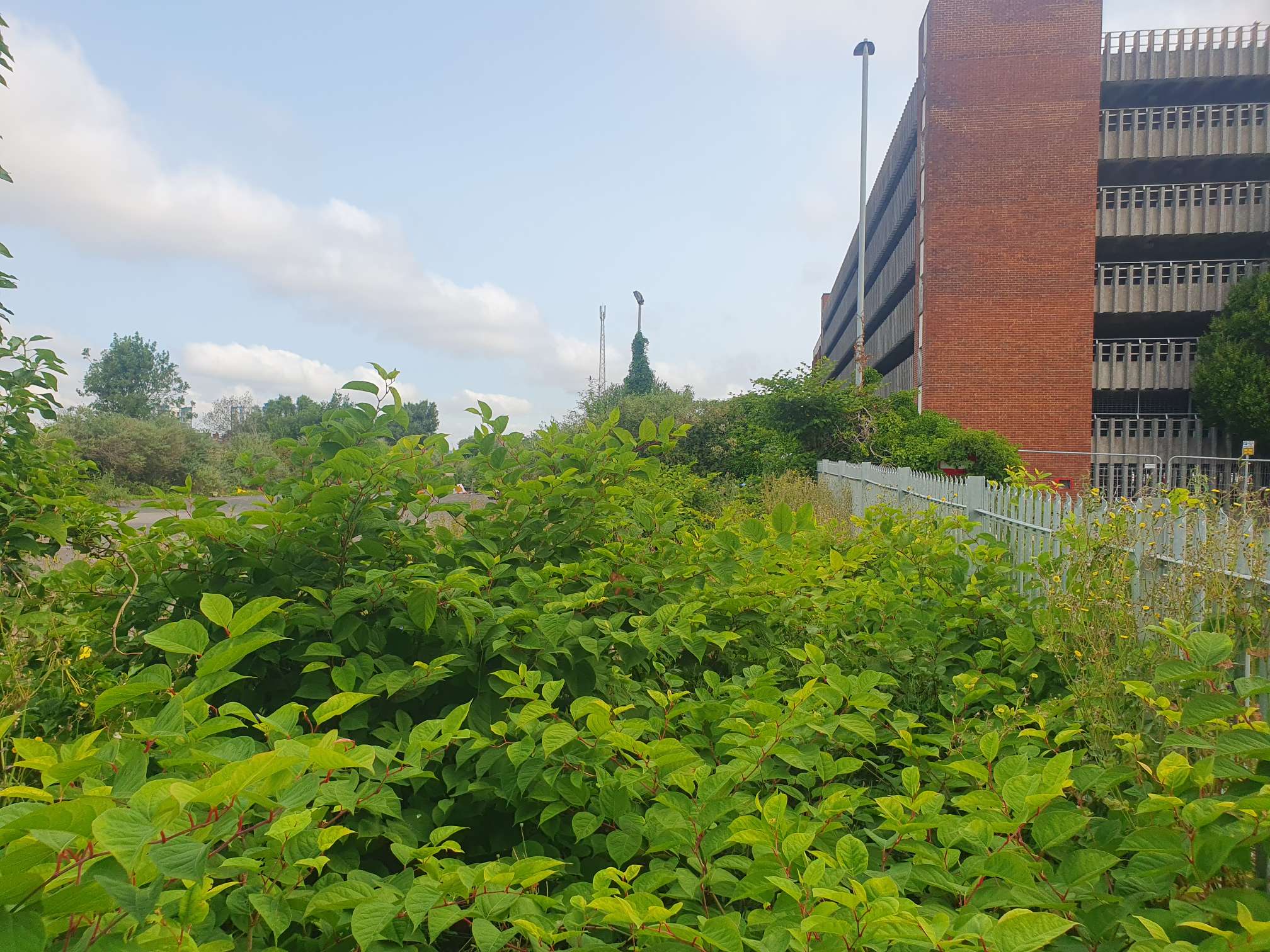
Japanese knotweed-related disputes are prevalent in the media – but what’s the real reasons behind them? In this guest blog our legal partner explains Japanese knotweed-related disputes and how failure to control knotweed has resulted in legal cases across the UK.
Guest blog: Japanese knotweed-related disputes
In this guest blog, our legal partner explains the pitfalls of ignoring Japanese knotweed.
Davies v Bridgend County Borough Council
Japanese knotweed remains one of the most problematic invasive plants in the UK, not only for its impact on property but also for the legal disputes it causes. In 2024, the Supreme Court clarified key principles in Davies v Bridgend County Borough Council, a case that has shaped how damages are assessed in knotweed claims.
The Court confirmed that while encroachment of knotweed can amount to an actionable nuisance, claims for residual diminution in property value will fail if that loss occurred before the defendant’s breach of duty. This means timing is critical: if the stigma attached to knotweed existed before your neighbour or local authority failed to act, you may not recover that loss.
Network Rail v Williams (2018)
Earlier case law, such as Network Rail v Williams (2018), established that landowners do not need to wait for physical damage before bringing a claim. The mere presence of knotweed rhizomes on neighbouring land can interfere with the use and enjoyment of property, making it an actionable nuisance.
The Law Society’s TA6 form
For sellers, disclosure obligations are equally important. The Law Society’s TA6 Property Information Form asks whether the property is affected by Japanese knotweed. A ‘No’ answer should only be given if you are certain there is no knotweed above ground and no rhizome within three metres of the boundary. Misrepresentation can lead to costly litigation, so accuracy is essential.
General guidance
Surveyors and lenders now follow updated RICS guidance, which replaced the old ‘7m rule’ with a risk-based approach. This focuses on actual damage and amenity impact rather than arbitrary distances, giving buyers and lenders clearer assessments.
Practical steps for homeowners include documenting any knotweed growth, engaging accredited specialists for treatment, and keeping detailed records of surveys and management plans. If you are selling, ensure full disclosure and consider obtaining a knotweed management guarantee to reassure buyers.
Finally
Remember that while it is not illegal to have knotweed on your land, allowing it to spread into the wild is an offence under the Wildlife and Countryside Act 1981. Failure to control knotweed can also expose you to civil liability if it encroaches on neighbouring property.
If you need advice on Japanese knotweed, or knotweed-related disputes, disclosure obligations, or settlement negotiations contact us today for expert guidance.