


Ben Lindley, Company Director at Japanese Knotweed Ltd. Last reviewed on 15th October 2026.
In this article, we look at identifying Japanese knotweed canes in winter, why it’s an essential part of a management plant to remove them and what advantages that has for treating and eradicating Japanese knotweed.
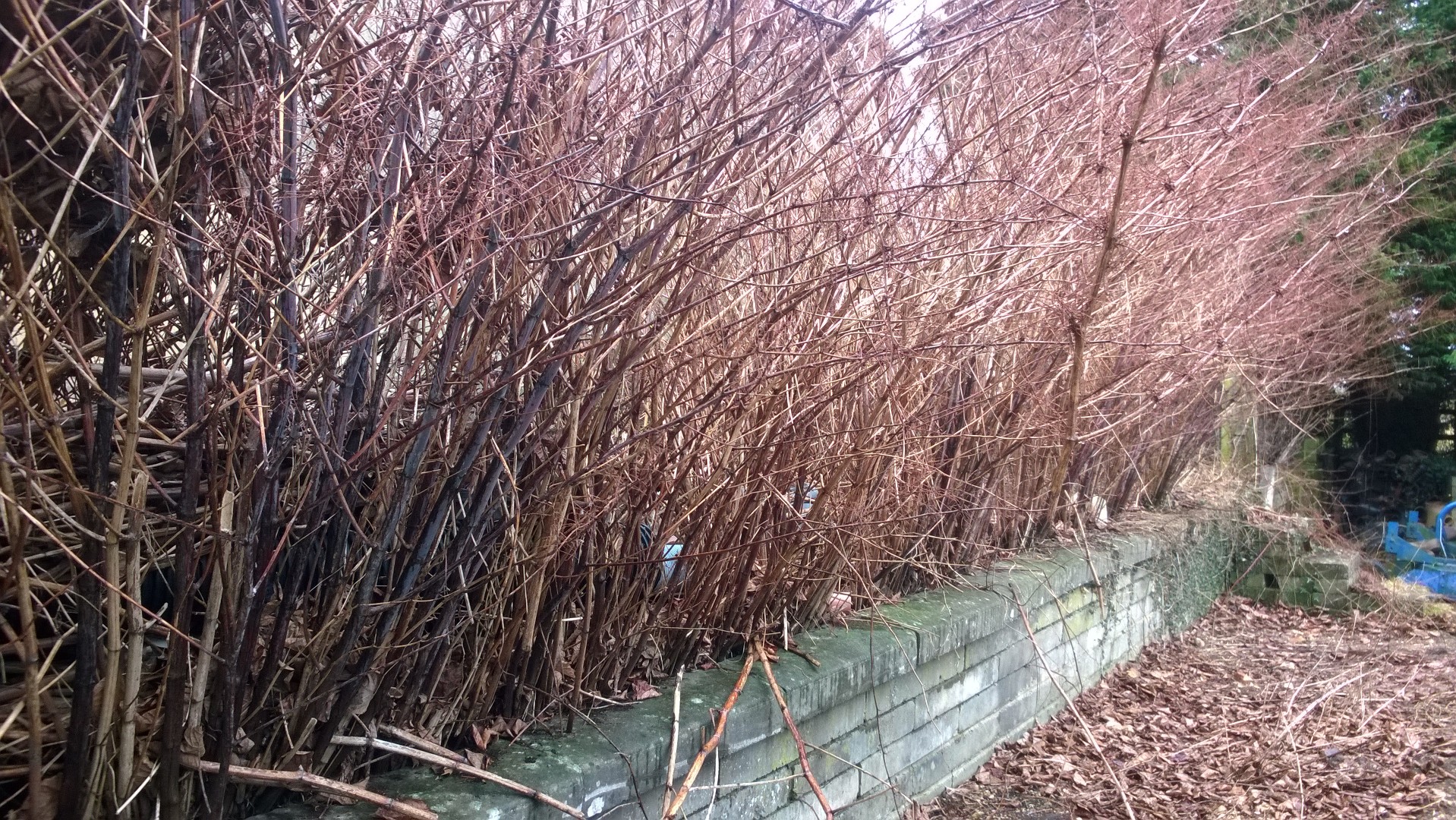
In winter Japanese knotweed stems turn into brittle canes that have a hollow centre. These are the remnants of the season’s growth and are a visible sign that a Japanese knotweed infestation has been left untreated (herbicide treatment of Japanese knotweed is most effective when carried out in early autumn, as the plant is taking nutrients out of its leaves and down into the rhizomes to store reserves over winter, thus allowing the herbicide to reach the whole plant).
These canes can be cut down using a brush cutter and removed in winter which gives increased visibility of new growth or access to the underground rhizome, so we’re not fighting through the canes when treating or excavating the new growth in the spring. Winter cane removal is a vital part of a knotweed management plan.

Why do we cut knotweed canes in winter?
Typically we carry out brush cutting over the winter months in readiness for the spring regrowth when we can then excavate and remove knotweed from site. If a knotweed treatment plan is in place, it’s important to have these old canes cut down and removed in winter as this makes treatment more effective in the upcoming season.
On an environmental level, knotweed canes create dense areas that can also block natural light out for other plants and species competing for winter sunlight. Cutting the canes down helps protect the habitat’s biodiversity.
Can knotweed be detected in winter?
Even during the winter months, our highly skilled surveyors are able to detect knotweed. As the picture below shows, if conditions warm up early in late winter or there is an unexpected warm spell, new growth can appear well before the official “growing season” (the picture below was taken in December!!)
In cases where the above ground growth does not provide a conclusive assessment, we can also conduct trial digs to determine the presence and extent of Japanese knotweed growth below the surface.

Key points to remember about Japanese knotweed over winter:
- Japanese knotweed plants lie dormant underground over the winter, only detectable to a highly trained surveyor’s eye.
- Even dead knotweed canes are considered “controlled waste” and can only be disposed of at a suitably licenced landfill site – you cannot put Japanese knotweed in your garden waste bin!
- If you want to know conclusively if invasive plants are on your land or property, getting a survey off an experienced professional is key.
- Especially if you have plans to develop land, it is even more crucial to have a professional survey carried out. Speak to us about our pre-planning/ purchase surveys specifically for developers, which are suitable to use as part of your planning application.